
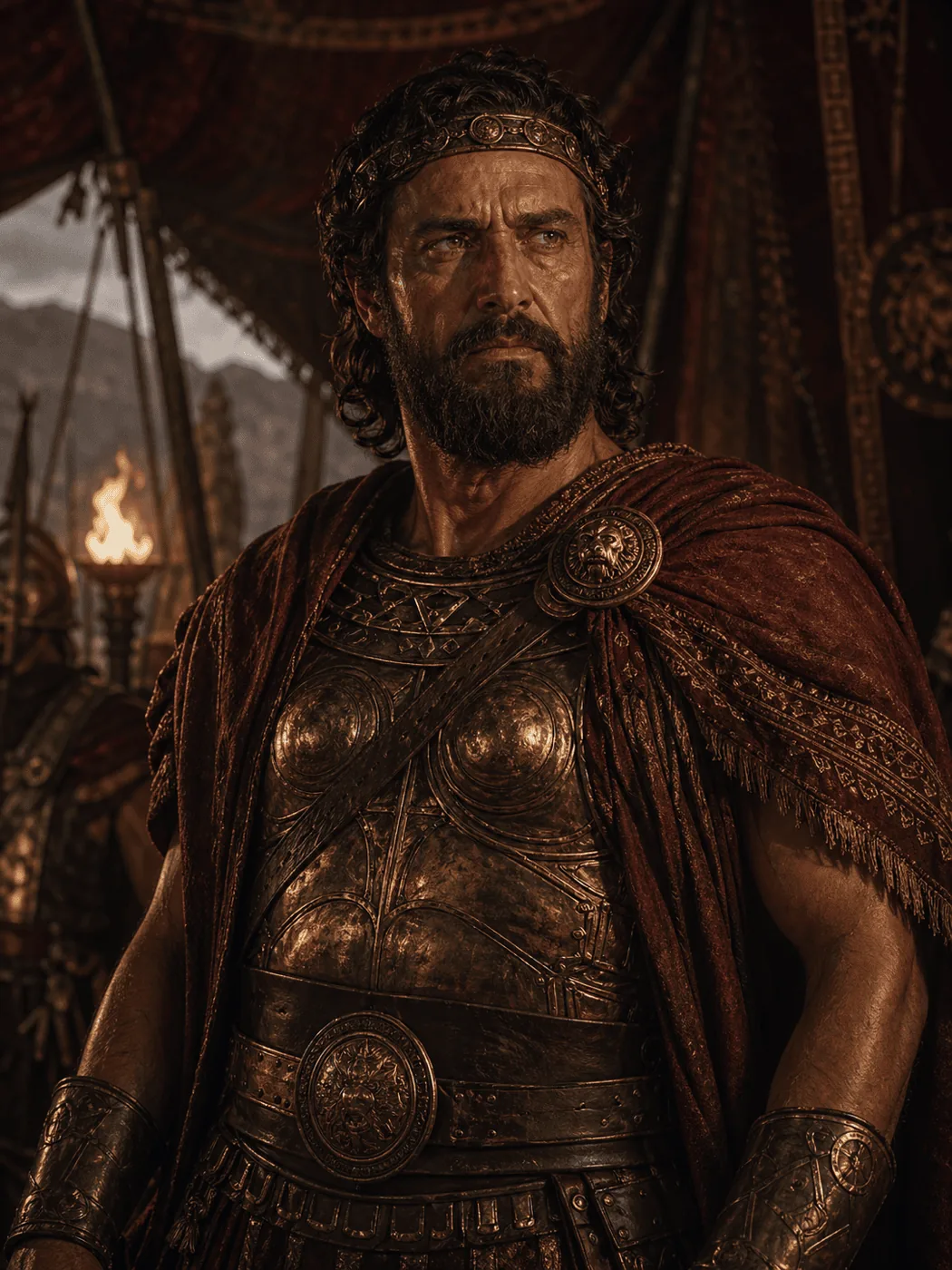
Agamemnon concentrates, between Troy and Ithaca, the problem of victory without guarantee. He is the official leader of the Achaean expedition, but his power rests on an unstable balance between dynastic prestige, military constraint and constant negotiation with other kings.
Commanding is not the same as ruling. Agamemnon shows it again and again: he can gather an immense army, but he does not master wounds of honor, family rancors or the intimate consequences of war.
A fragile authority
As coalition leader, he must hold together jealous kings, divergent interests and a burden of command that exceeds military prowess alone. His position is never that of an absolute sovereign; it looks more like leadership under pressure, exposed to contestation. His confrontation with Achilles makes this fragility visible. By humiliating the best Greek fighter, Agamemnon defends his rank, but weakens the army he claims to protect. The crisis says a great deal about heroic politics: everyone wants unity, but everyone measures that unity against personal honor.
Return as trial
Agamemnon's return reveals that war does not end when swords fall silent: the house can become the real battlefield. After Troy, danger no longer comes only from external enemies, but from domestic space itself. His death on return transforms nostos into a warning. Coming home victorious guarantees neither recognition, nor safety, nor repair. Military victory can even aggravate the disorders it leaves behind.
A counter-model for Odysseus
In the imagination of The Odyssey, Agamemnon prepares a strong contrast with Odysseus: winning the war does not mean restoring private order. His story haunts the return of Ithaca's king as a dark possibility. Odysseus will have to do exactly what Agamemnon could not do: come back without yielding too early, recognize threats inside his own house, and turn caution into political method.
What his power exposes
Agamemnon recalls that kingship is never only a title. It depends on alliances, sacrifices, conjugal loyalties, brothers, warriors and gods. When one of those links breaks, the whole structure wavers. He therefore embodies the institutional cost of Troy. Behind the great epic of conquest, his fate reminds us that the victors return with debts no one can erase.
The warning for Ithaca
Looking at Agamemnon helps explain why Odysseus' return is politically charged with suspicion from the beginning. His example makes Ithaca dangerous before the hero even arrives. If Agamemnon, chief of chiefs, can die at home, then the household is no automatic refuge: it becomes the final test of power.