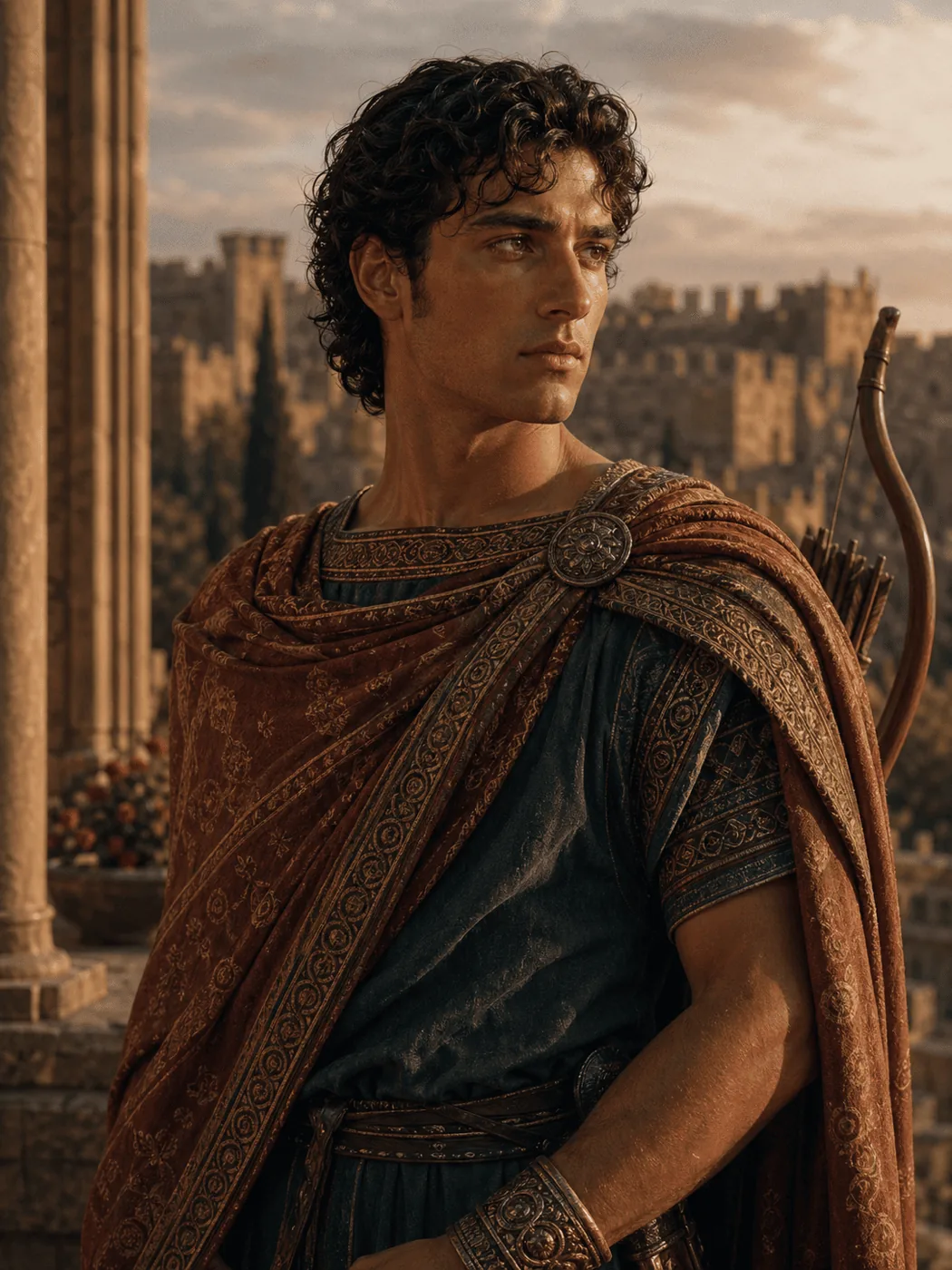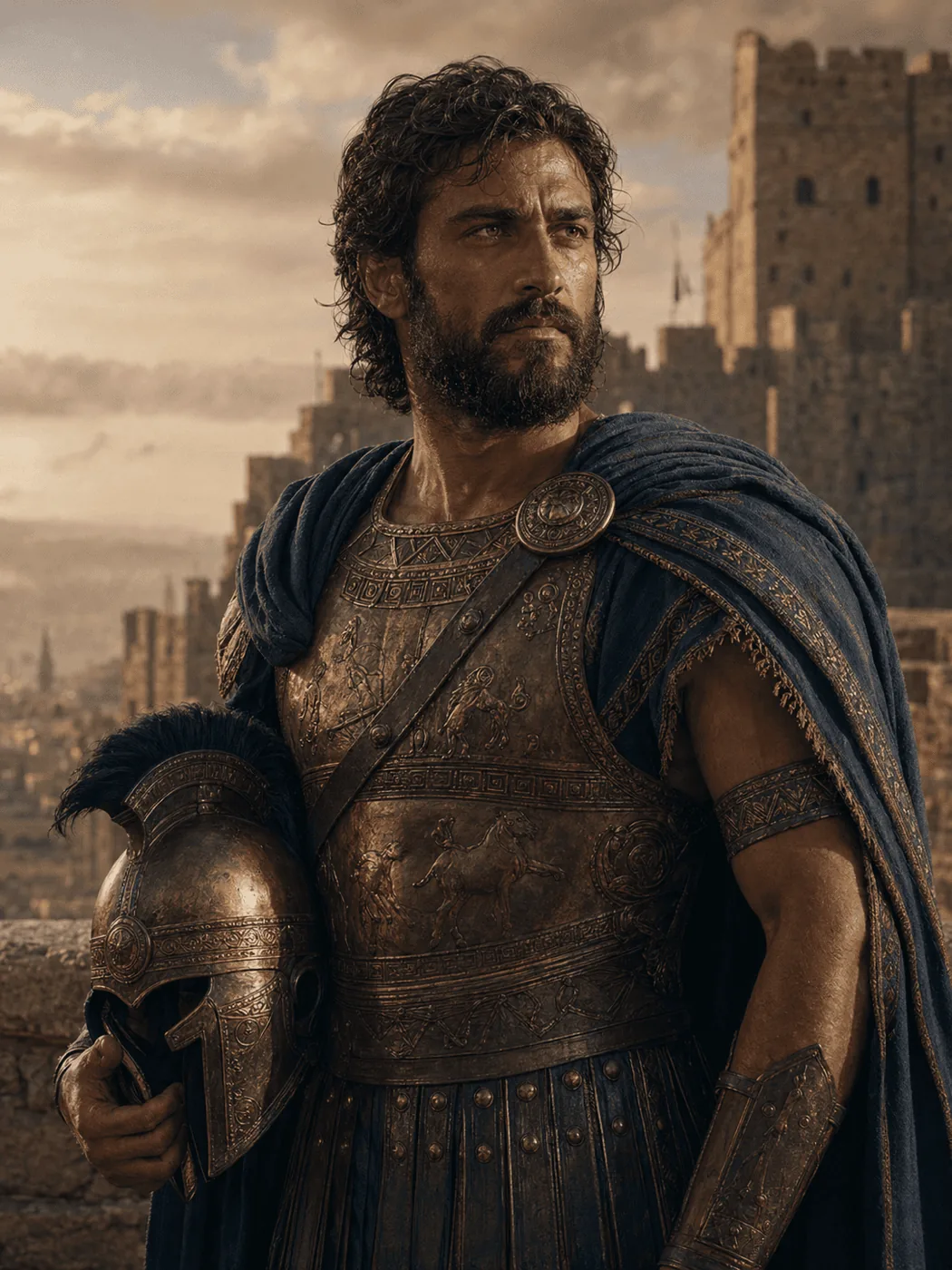
Hector
Hector gives Troy its most human face: duty, family and doomed courage.
 From Troy to Ithaca
 Houses and camps
An index by mythological roles, families, alliances and political tensions.
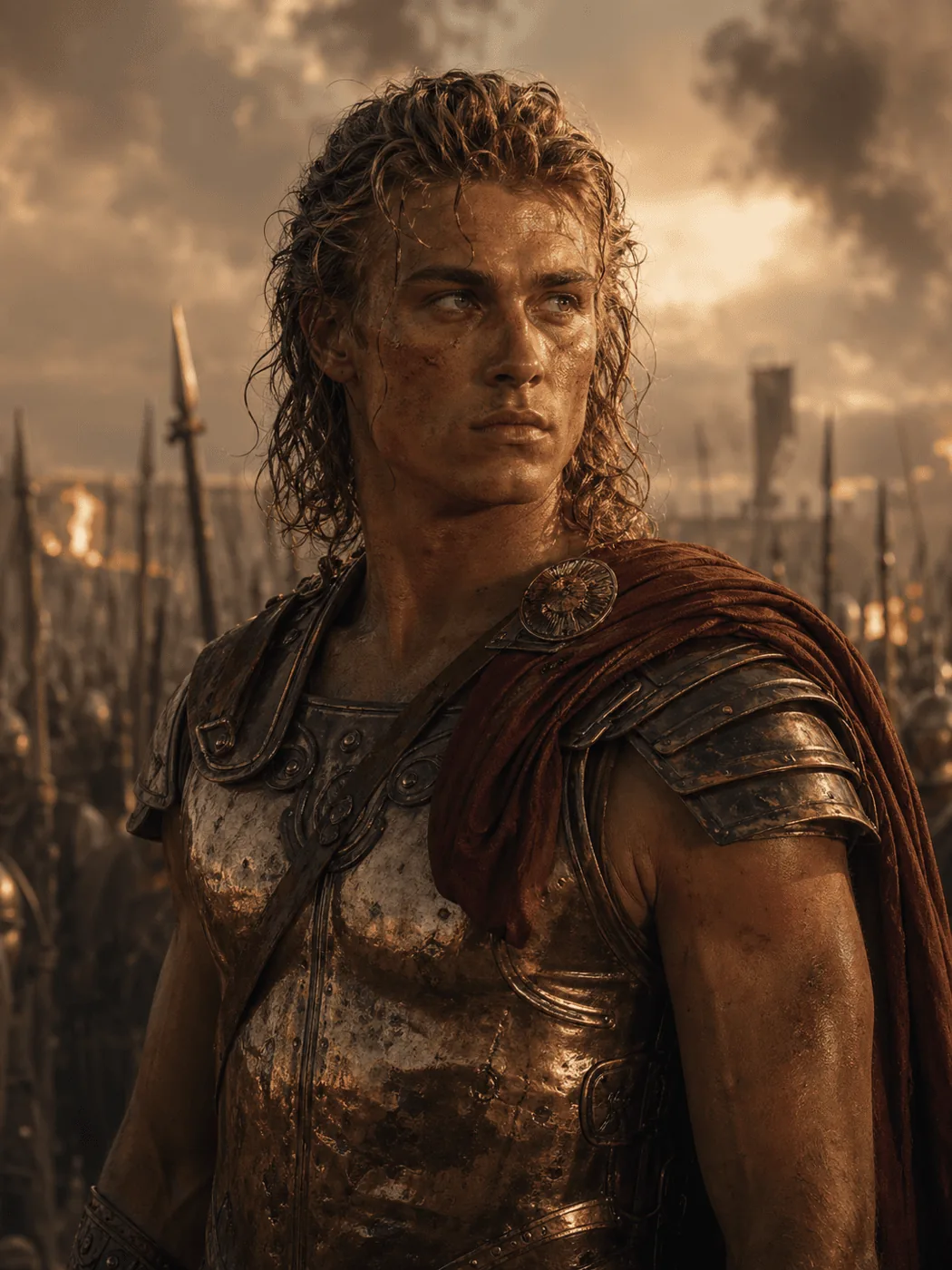
Achilles belongs above all to The Iliad, but his shade in the Underworld corrects heroic glory.
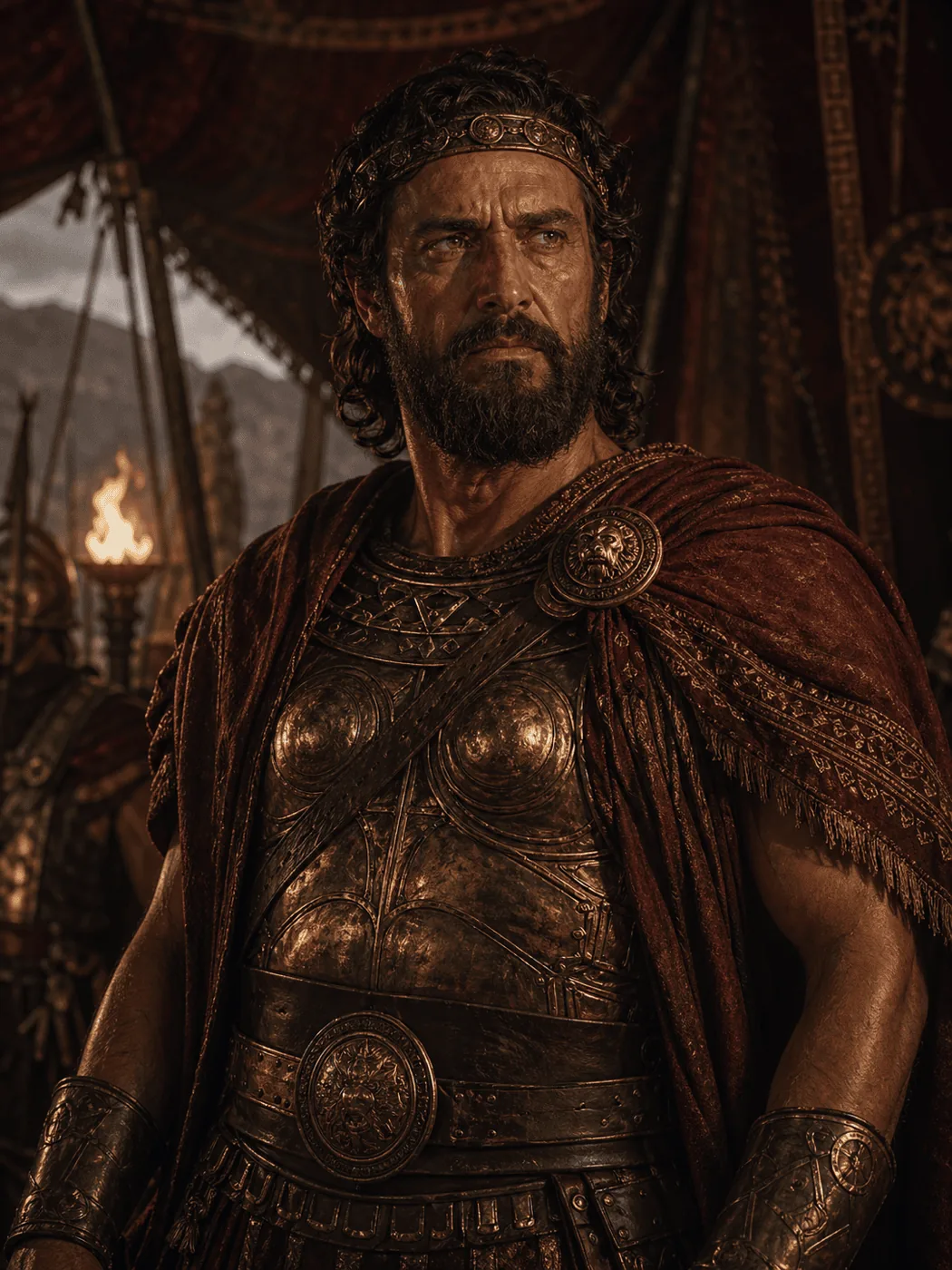
Agamemnon commands the Greeks, but his own return shows that coming home can be worse than fighting.
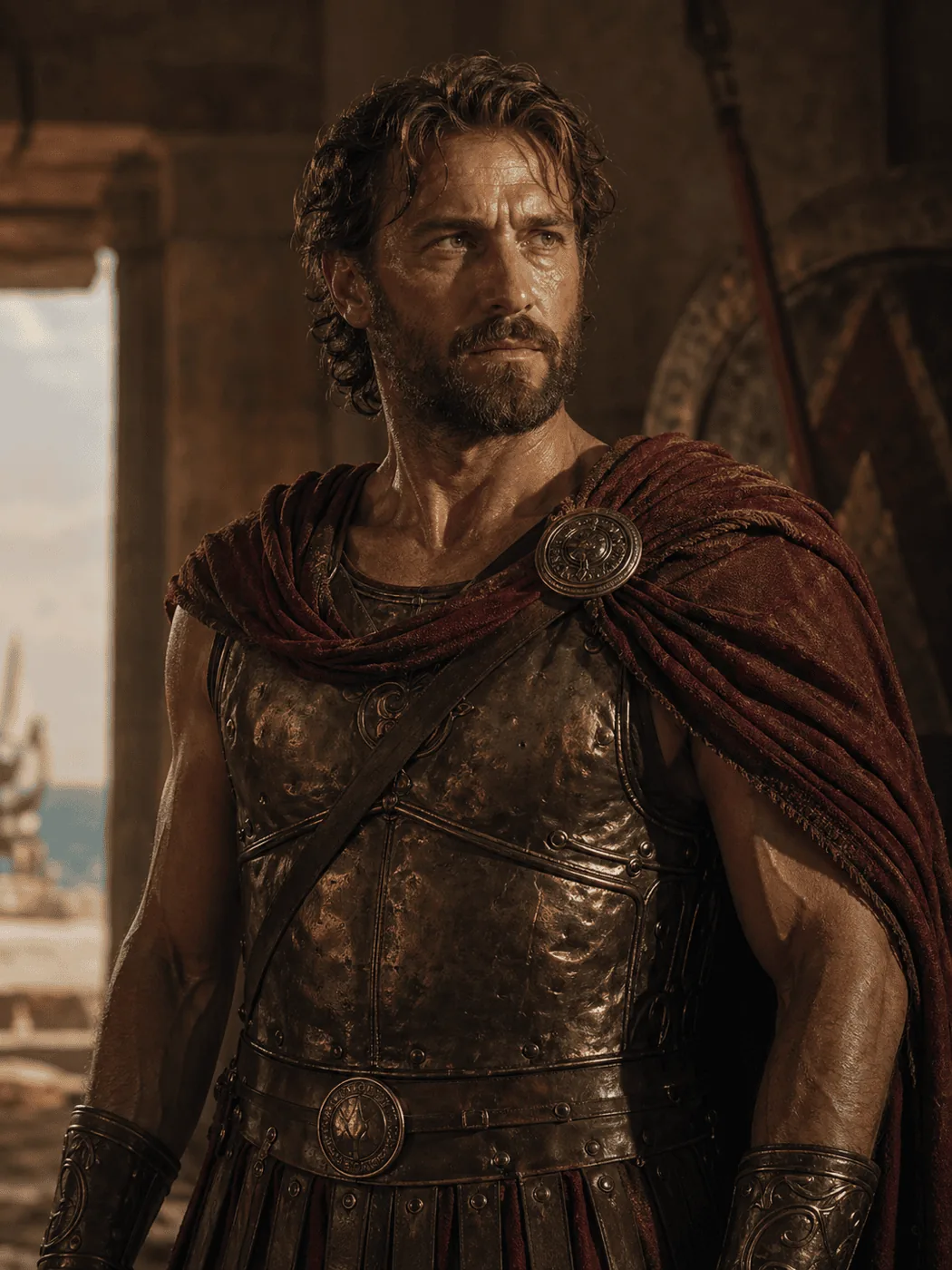
Menelaus is the man whose humiliation becomes a coalition.
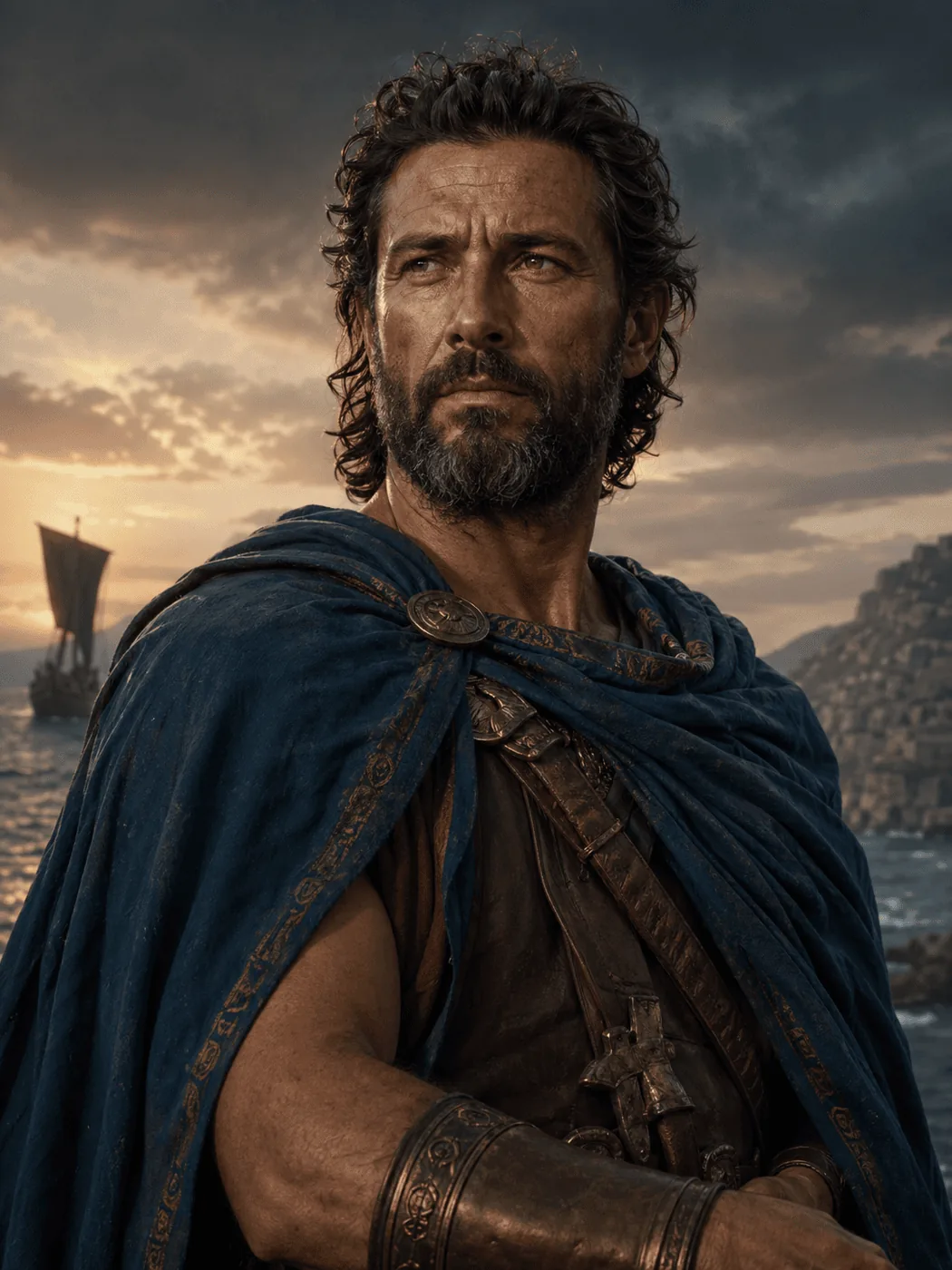
The king of Ithaca wins Troy by cunning, then has to survive his own need to be recognized.

Penelope waits, but her waiting is active: she governs, delays and tests.
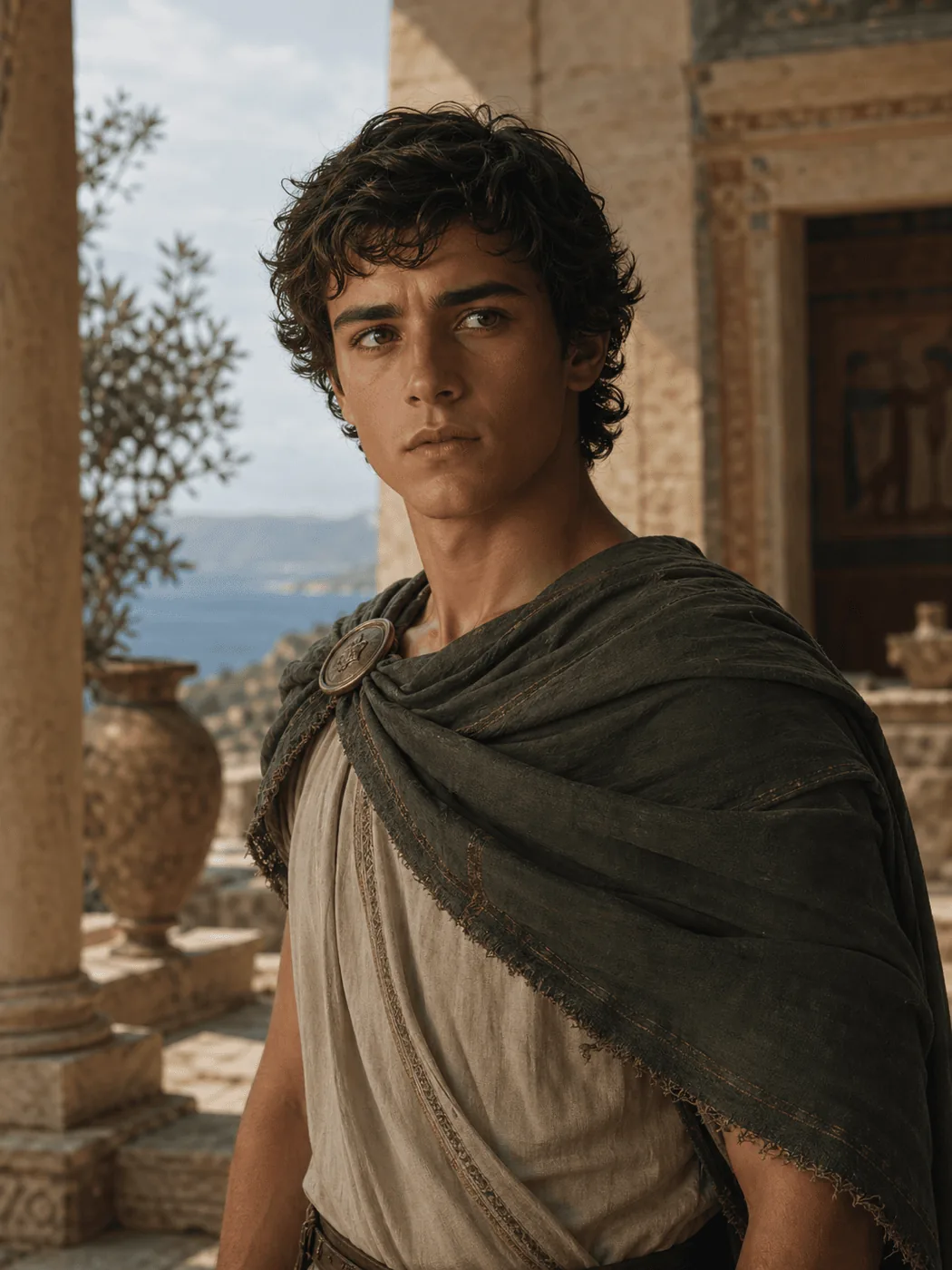
Telemachus grows up in an occupied house and must learn how to become a king's son.
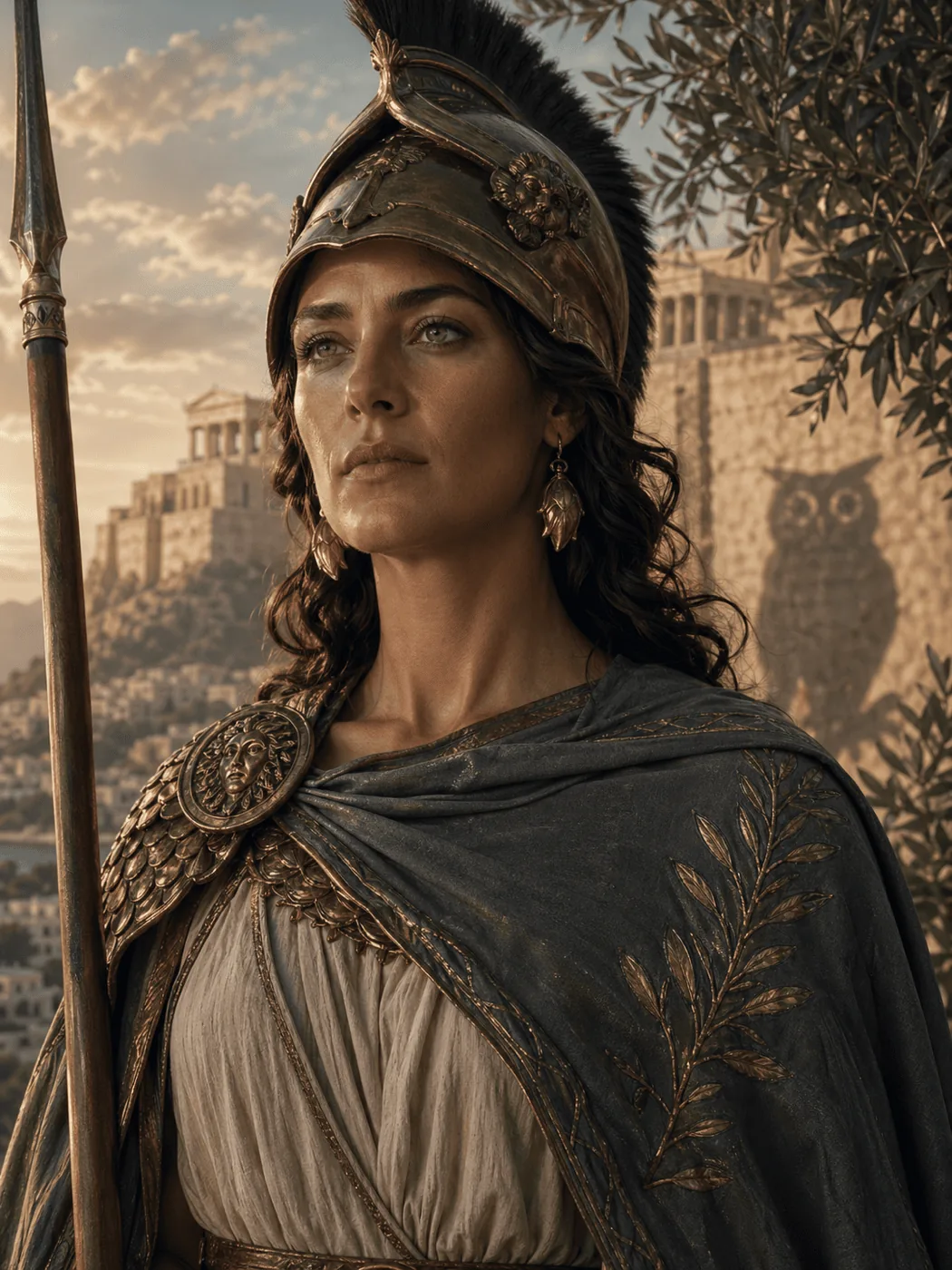
Athena helps Odysseus because she recognizes an intelligence close to her own.
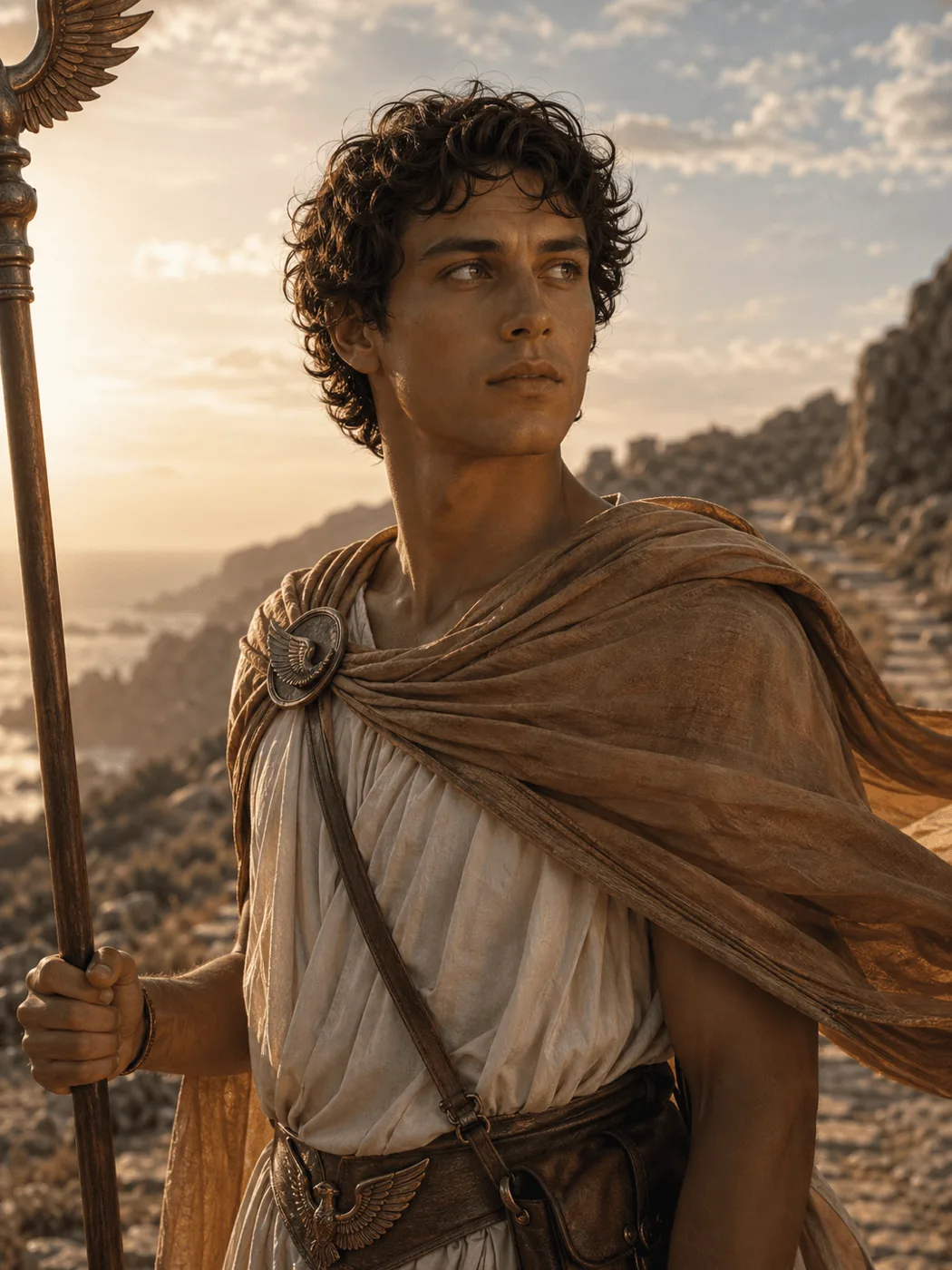
Hermes intervenes when Odysseus must cross a threshold: Circe, Calypso, divine decision.
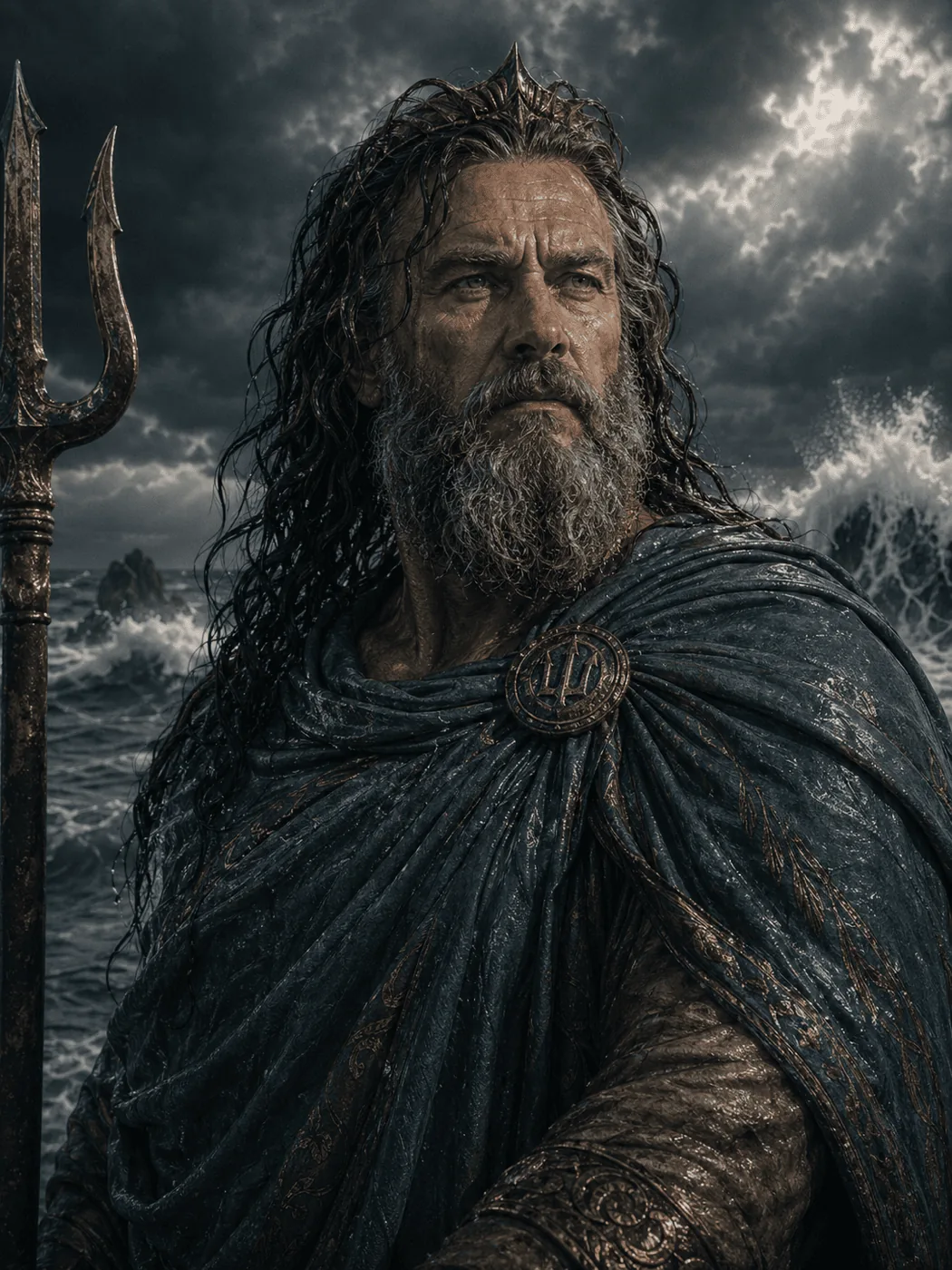
Poseidon pursues Odysseus because Polyphemus, the blinded Cyclops, is his son.
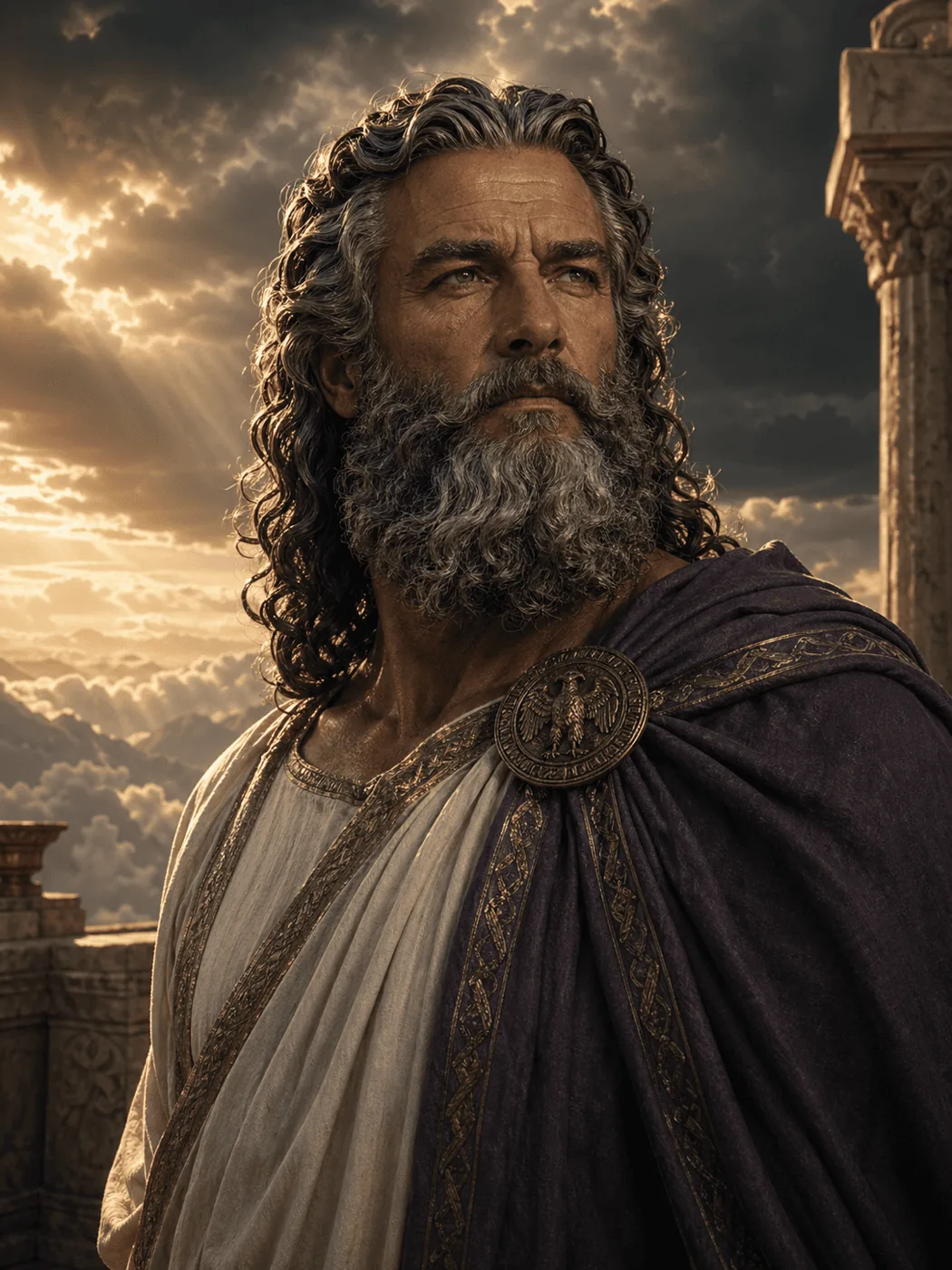
Zeus arbitrates, authorizes, punishes and maintains order between gods and mortals.

Calypso keeps Odysseus by offering an eternity that would cancel his return.

Circe is first a threat, then a host who gives Odysseus the means to continue.
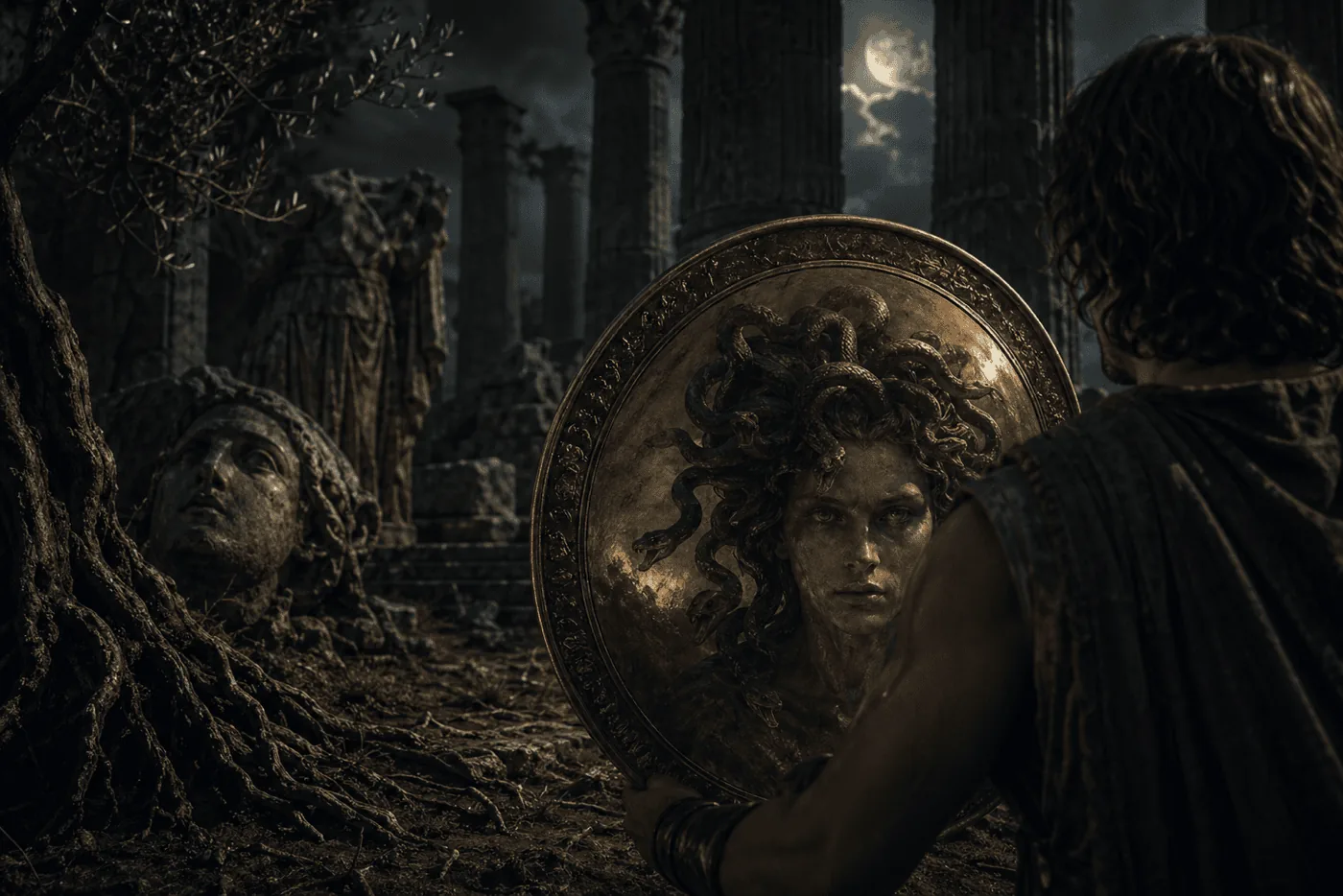
Medusa turns the gaze itself into a battlefield: to survive, the hero must learn to see through danger.

Polyphemus violates hospitality, but his wound triggers Poseidon's revenge.