24.90 x 18.70 mm
Historical, reliable, but less sovereign when the screen becomes immense.
Native ratio about 1.33 From Troy to Ithaca
 The large image
IMAX 65/70 mm is not merely a sharper picture. It is a way of pressing the world upon the spectator: giant negative, taller frame, demanding camera, rare projection. For The Odyssey, the choice serves a simple idea: make the sea, islands, bodies and monsters feel physically present.
The heart of the image
An IMAX film camera uses 65 mm 15-perf stock. The film runs horizontally, and each frame occupies a vast surface. More surface means more detail, less apparent grain, and a precious reserve for giant screens.
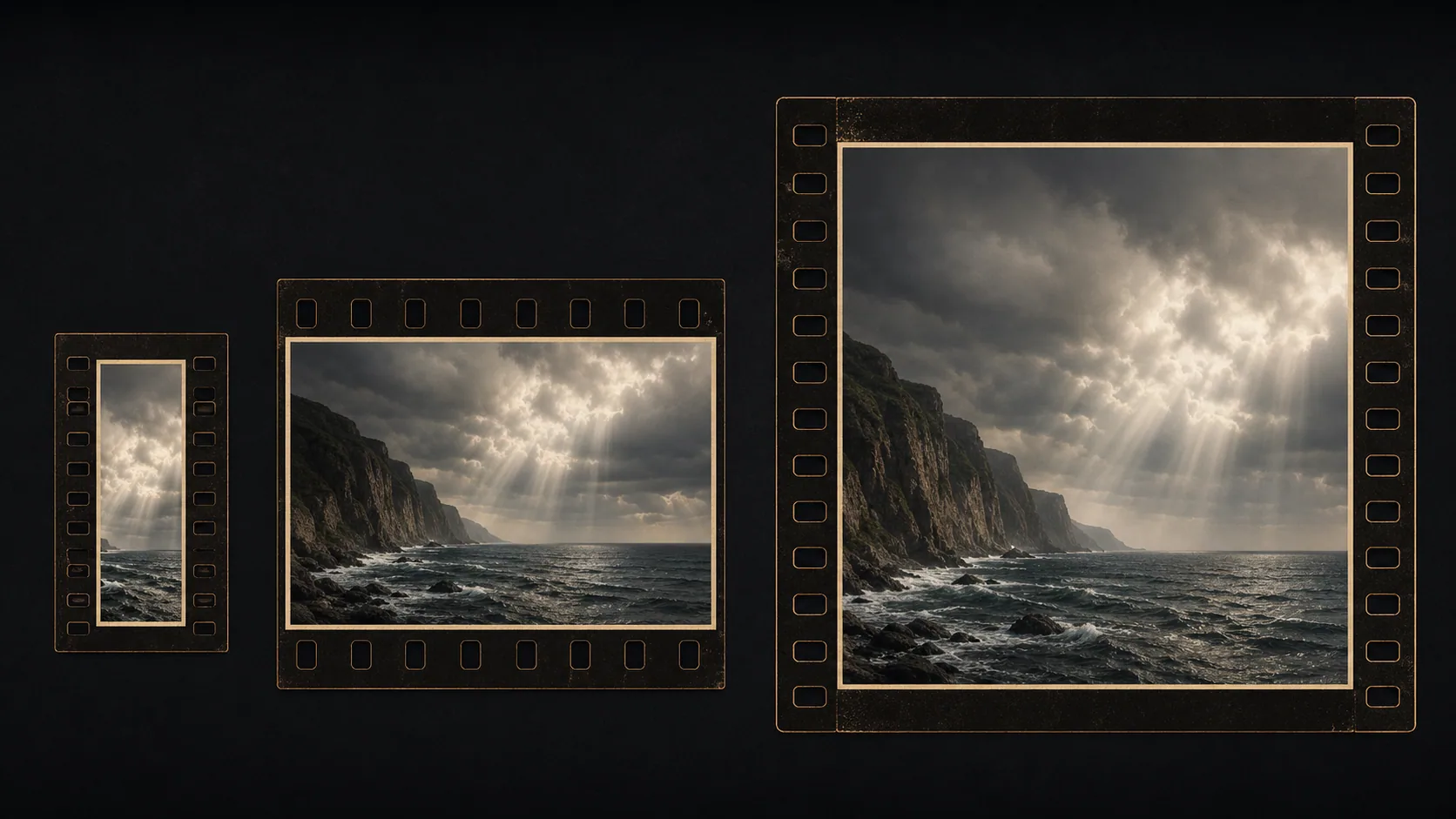
Historical, reliable, but less sovereign when the screen becomes immense.
Native ratio about 1.33A broad horizontal format, ample and tied to classical 70 mm spectacle.
Native ratio about 2.20A giant negative: detail, texture, height and almost physical presence.
Native ratio about 1.43Same image, three windows
On a sea scene, 2.39:1 stretches the horizon. 1.43:1 keeps sky, wave, ship and threat in the same field. That matters for a story of masts, cliffs, gods, caves and monsters.
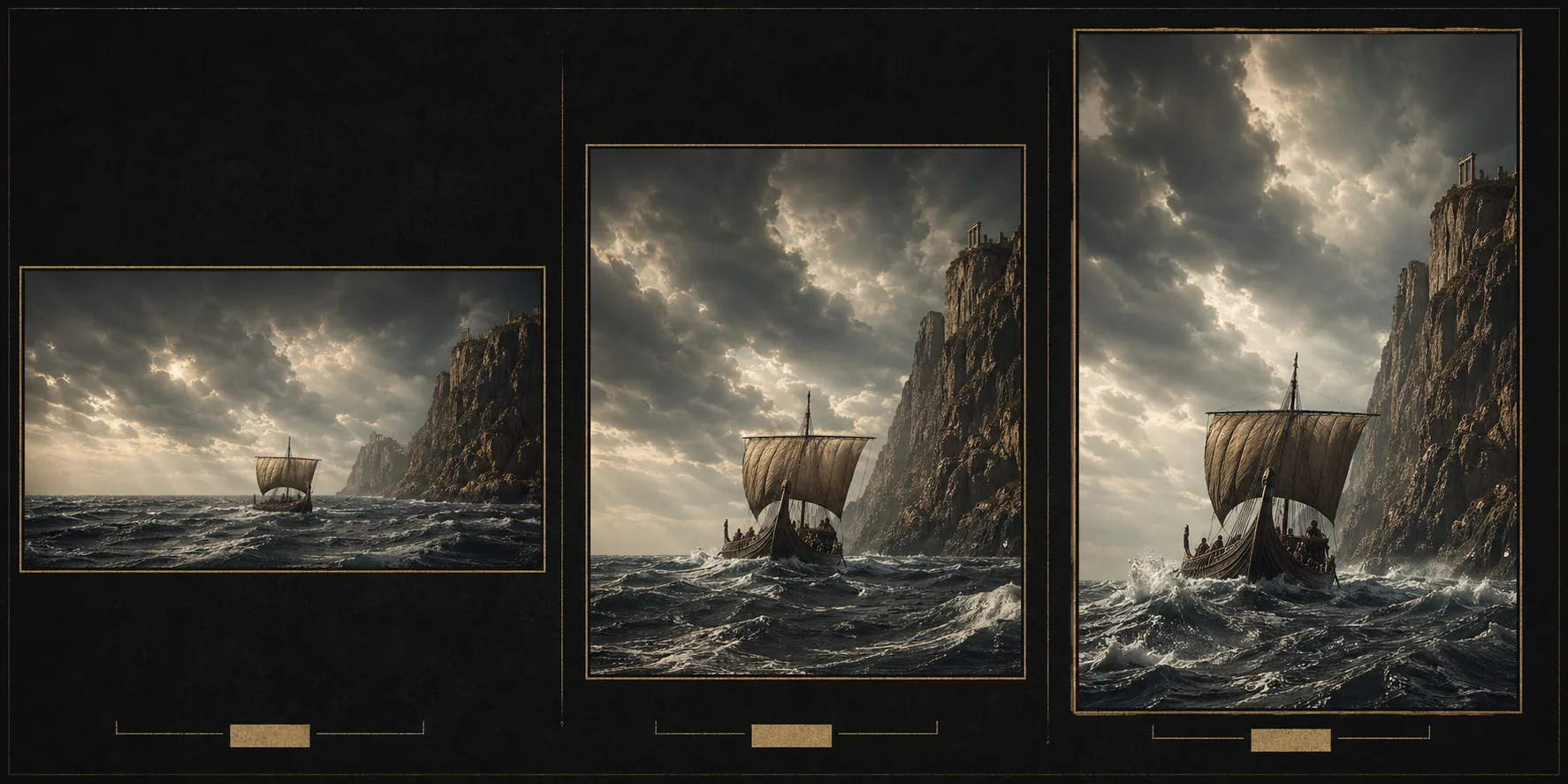
Camera angles
With a very vertical format, camera position becomes even more expressive. A low camera turns the world into a threat; eye level keeps intimacy; a high angle places Odysseus back inside the map of fate.
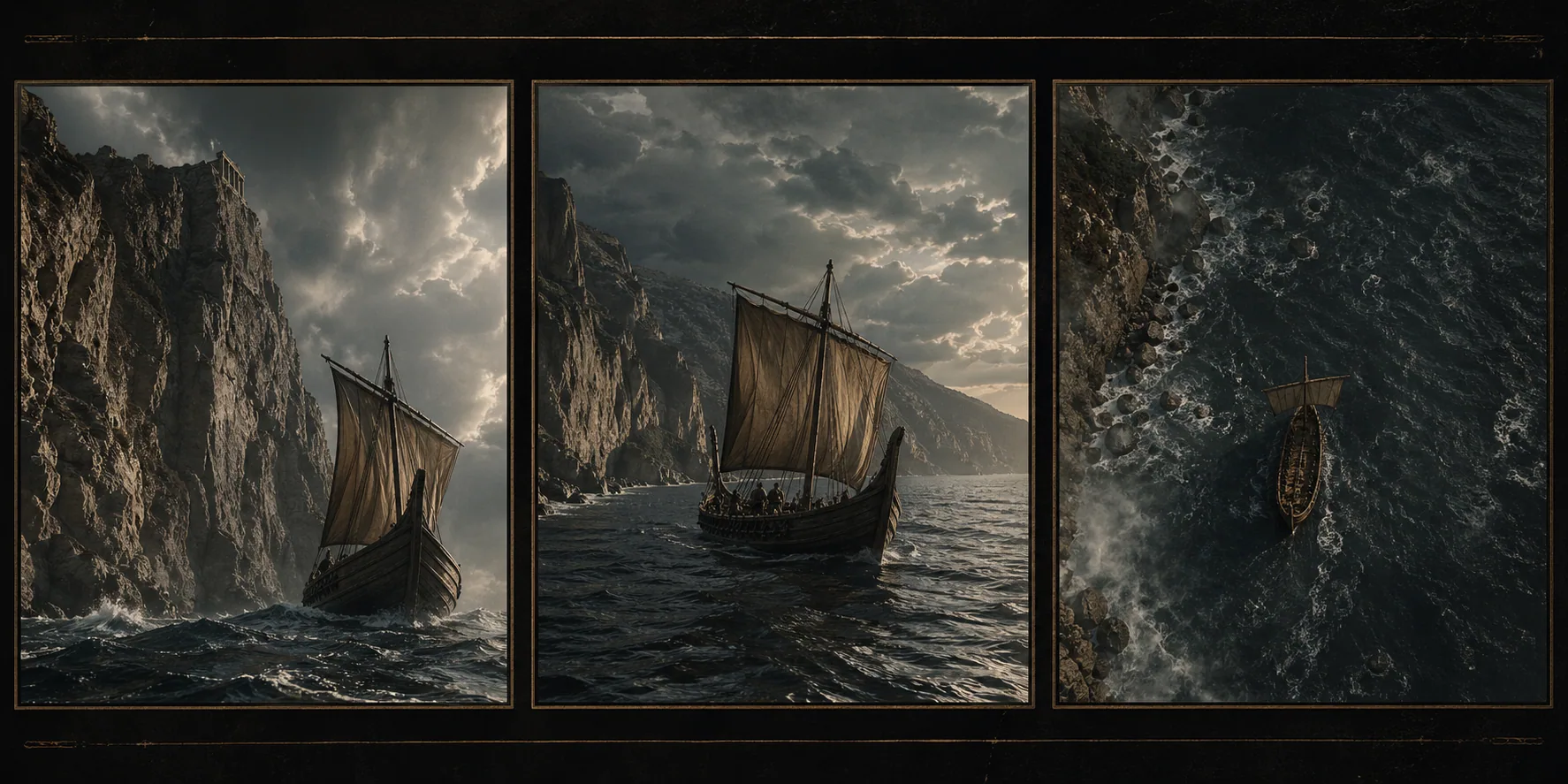
The cliff, mast or Cyclops takes over. The hero looks small, caught in a force larger than himself.
The shot remains intimate: the setting exists, but gaze, fatigue and decision stay central.
The same scene becomes route and trap: ship, isolation, distance. IMAX keeps enough matter to read space.
Narrative force
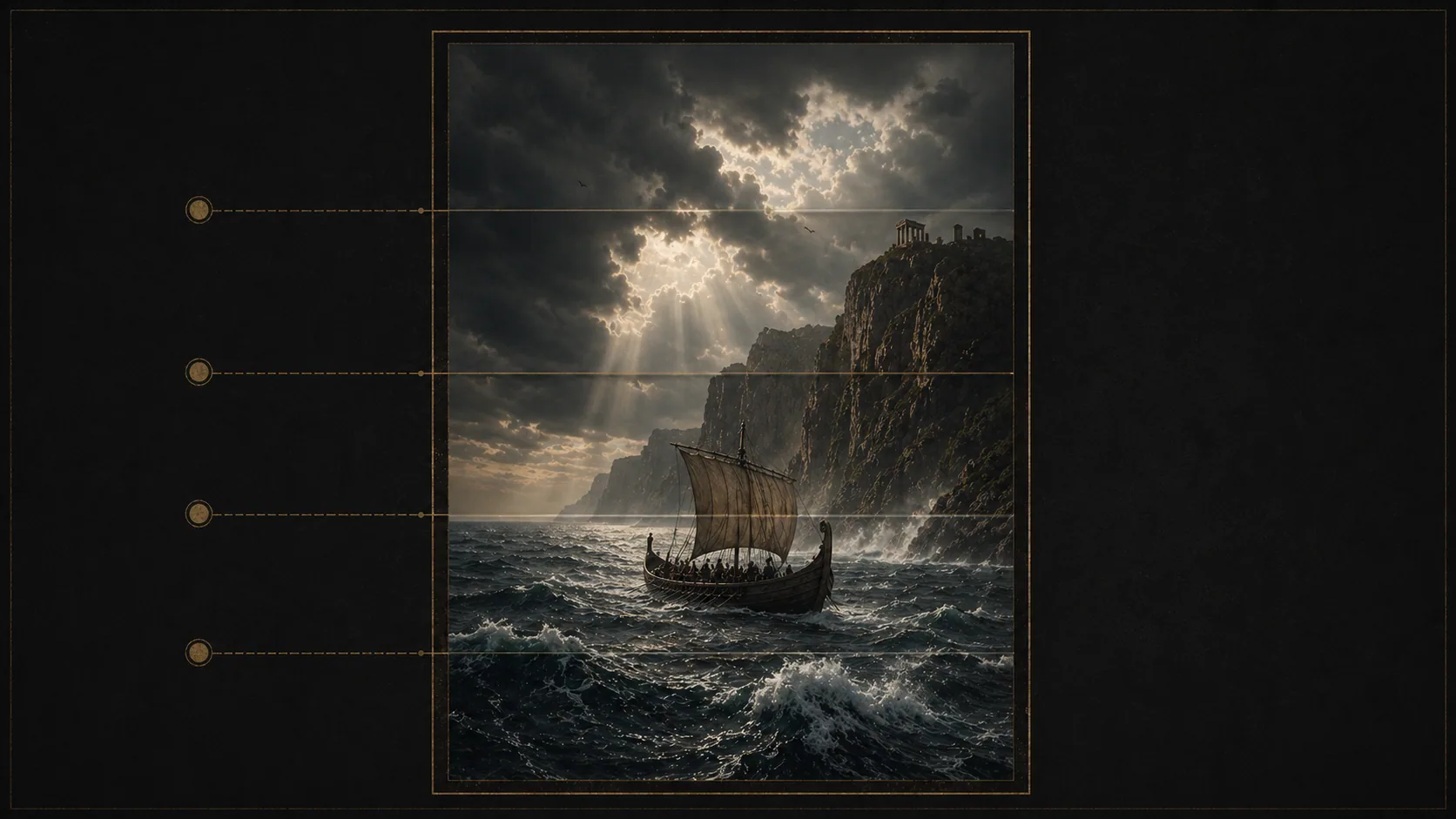
The main interest of IMAX is not only definition. It is the ability to hold a face, a texture, depth and a mass of setting together without flattening the image.
In The Odyssey, that can turn the sea into a character: not a blue background behind Odysseus, but a mass that occupies the frame, rises over the body, crushes the ship and gives the return a real physical hardness.
The price of spectacle
The larger the negative, the more demanding the whole system becomes: film stock runs fast, cameras are complex, focus is delicate and ideal projection is rare. The choice becomes magnificent when the mise en scene exploits it. Otherwise, it is only a very expensive luxury.
A 1,000-foot IMAX 15-perf magazine lasts about 2 minutes 57 seconds at 24 fps.
Fewer endless takes, more discipline at the moment of shooting.
Long heavy, noisy and hard to move; the new cameras announced for the film promise more agility.
The full 15/70 effect remains rare: many viewers will see a Laser, premium or standard version.
The summit: height, detail, photochemical texture. Rare, therefore precious.
Very spectacular, sometimes in 1.43 or 1.90 depending on the auditorium, with a digital rendering.
Large image, strong sound, but not necessarily the full IMAX frame.
The composition remains, but part of the physical shock disappears.
Verdict
The format turns the journey into a bodily experience: the small man, the immense sea, the too-high sky, stone and skin in the same shot. The promise matters only if Nolan truly uses verticality, distance and real matter. If the image makes the ancient world seem to fall onto Odysseus, the logistical ordeal will have found its reason.
Checked sources