From the golden apple to the bed of Ithaca

Timeline

The chronological line that links mythology, war and return: a progressive reading, clearer and ready for images.

This page works as a compass. Each period keeps a simple entry, narrative markers, a clear consequence and a visual slot.

Before Troy

Step 1

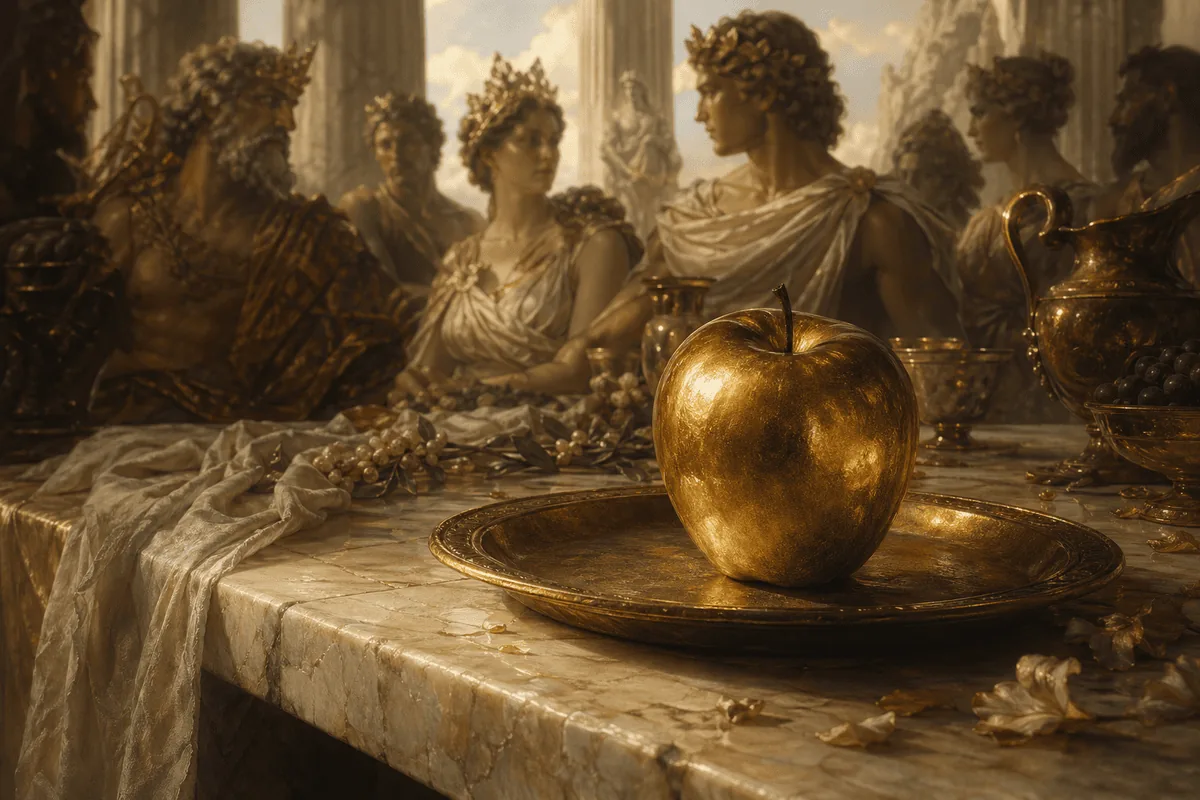
The wedding of Thetis and Peleus

Place / axis: Olympus, shore of the Styx · trigger

A divine feast turns into a contest of influence: the golden apple becomes the first fracture among the gods.

  • The wedding recalls the place of the gods in the mechanics of the conflict.
  • Cosmic resentment precedes and amplifies the human war.

Film reading: A short visual prologue can establish immediately who is pulling the threads of the tragedy.

Consequence: The balance between divine families falls out of tune, opening the logic of revenge that follows.
central mythessential prelude
Symbolic drawing of the golden apple on the table of the gods

Before Troy

Step 2

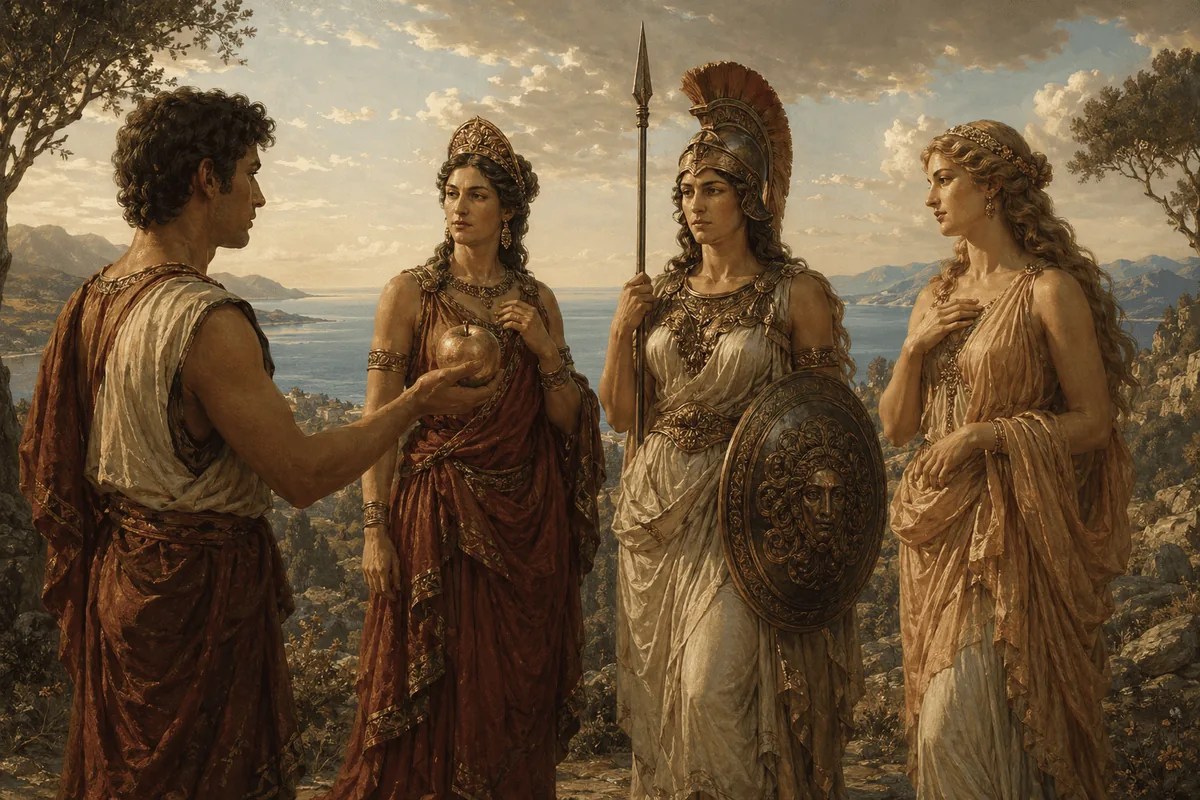
The Judgment of Paris

Place / axis: Mount Ida, then Sparta and Troy · trigger

Paris chooses Aphrodite and receives the promise of Helen, turning a court dispute into an imperial stake.

  • The choice is less a romantic act than a political decision with geopolitical consequences.
  • Paris receives Helen in exchange for an invisible debt: the price of desire.

Film reading: The sequence can immediately raise the question of the price of reputation.

Consequence: The Achaean world and the Trojan world stop being diplomatic: war becomes probable.

central mythkey escalation
Illustration of Paris in a judgment scene

Outbreak

Step 3

Helen's abduction or departure

Place / axis: Sparta and the Aegean Sea · outbreak

A personal rupture becomes a question of authority, honor and law between kingdoms.

  • Menelaus turns the private question into a political appeal.
  • The Greek camp organizes itself through the logic of a collective expedition.

Film reading: The viewer quickly understands why the coalition forms so fast.

Consequence: The conflict between Troy and Greece becomes collective, beyond the main figures alone.

Iliad contexthonor dynamic
Stylized map of the Sparta-Troy zone before the fleet leaves

Outbreak

Step 4

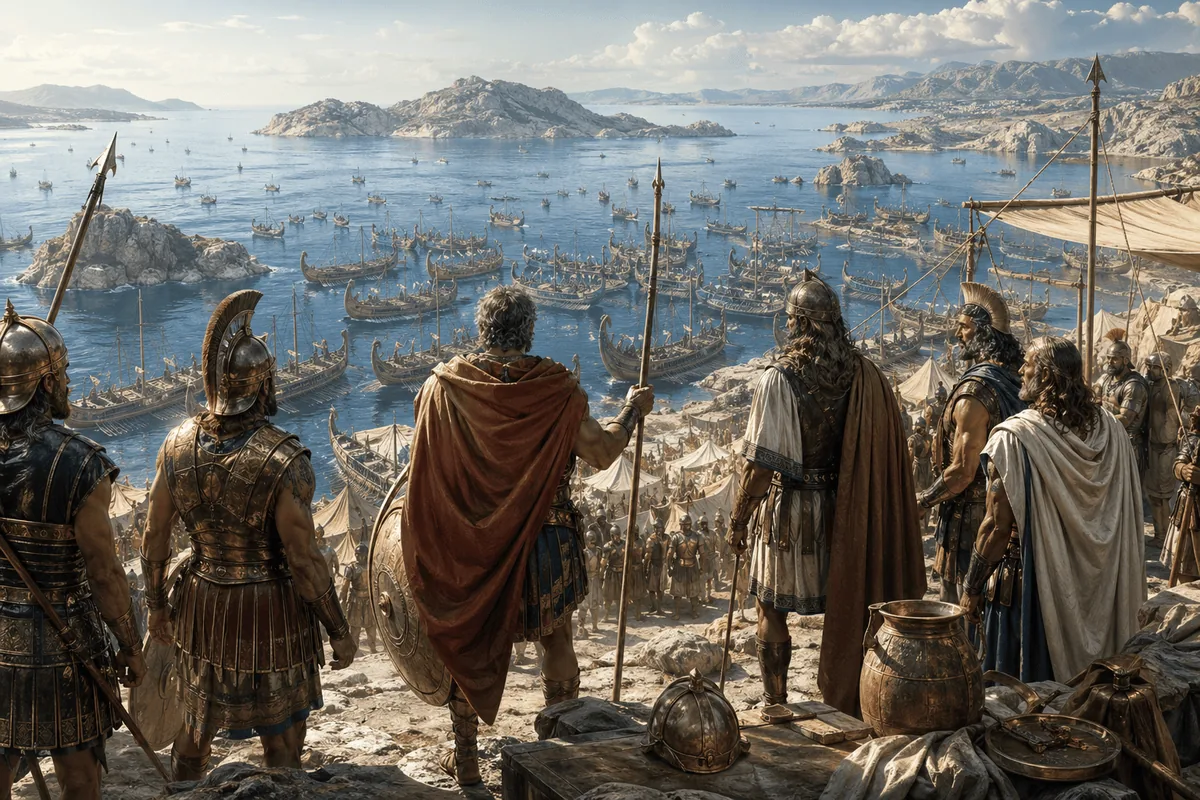
The Achaean coalition

Place / axis: Aegean islands and gathering ports · preparation

No king fully agrees, but everyone wants to count in the victory to come.

  • The alliance hides a competition of egos and prestige between leaders.
  • Odysseus becomes important through his ability to negotiate, organize and contain.

Film reading: This is a strong montage moment: diplomacy, promises, discord.

Consequence: The machinery of war starts moving before the first assault.

Iliad contextpolitical tension
Diagram of the Achaean coalition in the Aegean Sea

Iliad

Step 5

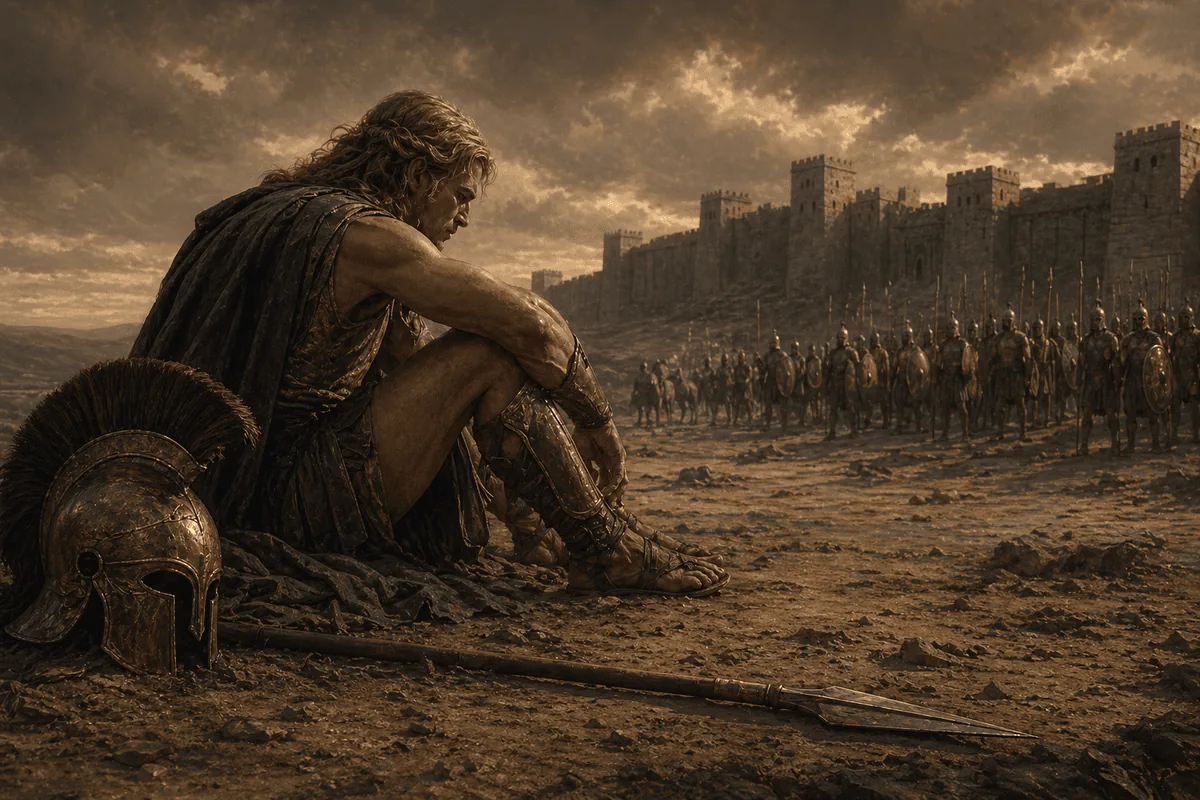
The anger of Achilles

Place / axis: Before the walls of Troy · conflict

The Iliad is not a total military chronicle, but a map of pride, loyalty and mortality in crisis.

  • Achilles does not withdraw out of weakness: he withdraws to remind everyone who sets the implicit rules.
  • The stake becomes moral as much as military.

Film reading: The Greek text can become silence first, then sudden violence.

Consequence: One hero's anger changes the fate of thousands of fighters.

Iliad contextdramatic core
Stylized figure of Achilles and the fire of his anger

Fall

Step 6

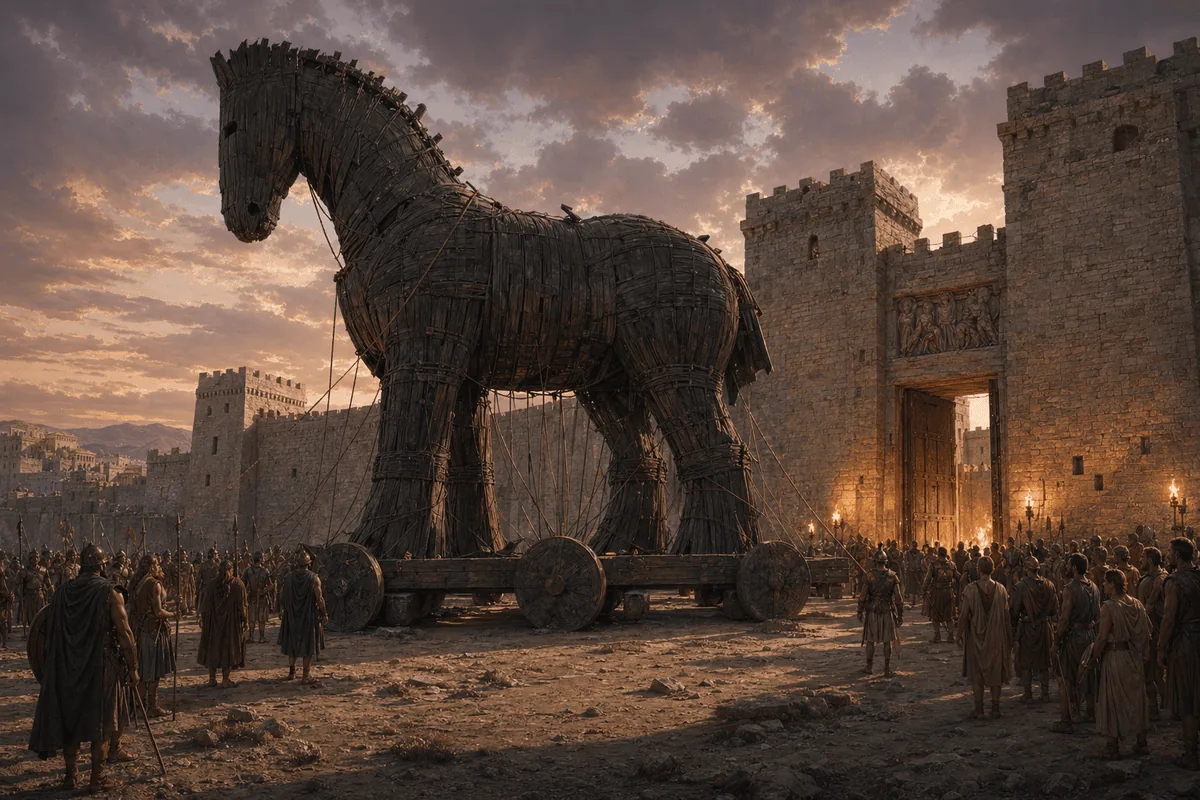
The Trojan Horse

Place / axis: Troy, inner harbor · turning point

Cunning replaces frontal conquest: the decisive weapon is psychological, not only military.

  • The gates do not fall; collective vigilance breaks.
  • The gift and the ceremony become instruments of collective intoxication.

Film reading: The scene grows stronger if it shows Trojan doubt, then the decision to accept.

Consequence: The turn allows the city to fall, but opens a durable cycle of diffuse violence.

central mythfilm prefiguration
Visual of the Greek horse at the entrance of Troy

Fall

Step 7

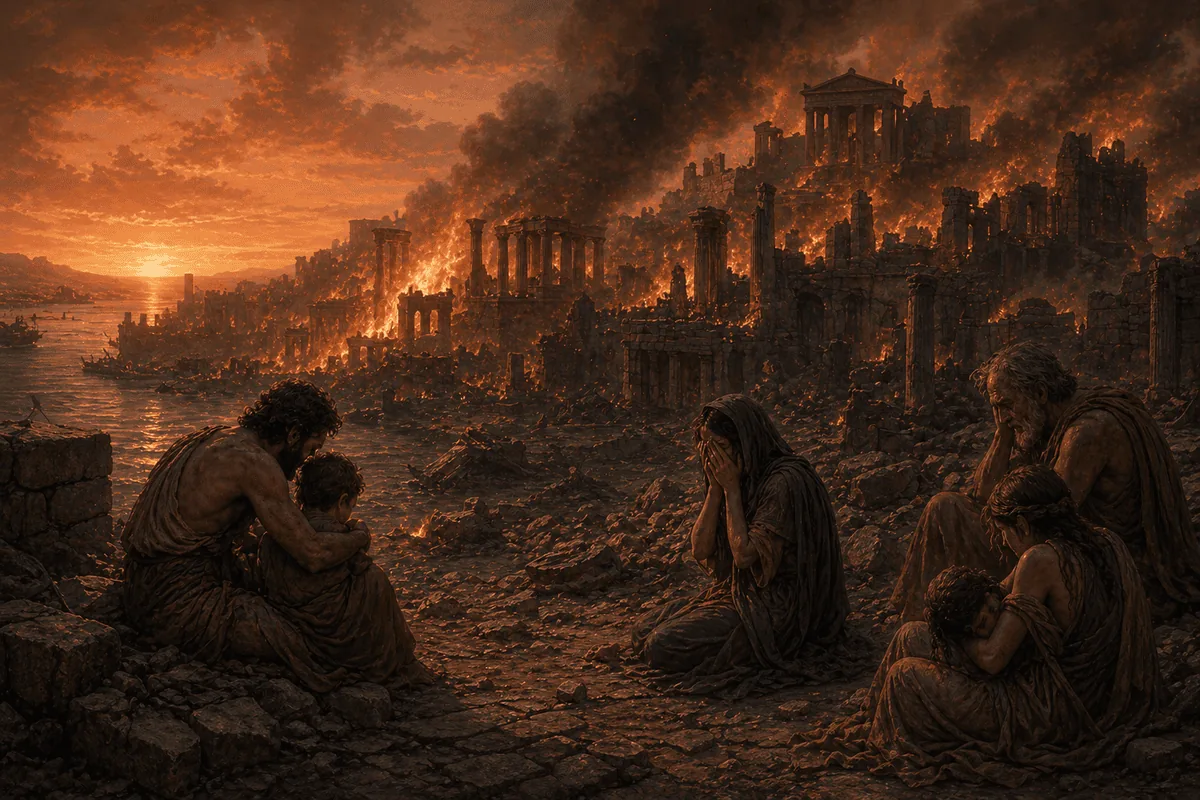
Troy burns

Place / axis: City of Troy · collapse

Greek victory ends the war on one side and the possibility of peace among the camps on the other.

  • Individual paths become tragic: captives, survivors, scattered families.
  • Victory does not close the narrative; it opens nostalgia and exile.

Film reading: Ruins plus silence: less spectacle, more human weight.

Consequence: Each hero enters an inner exile; what follows depends on return.

central mythpost-traumatic
Destroyed city at nightfall

Wandering

Step 8

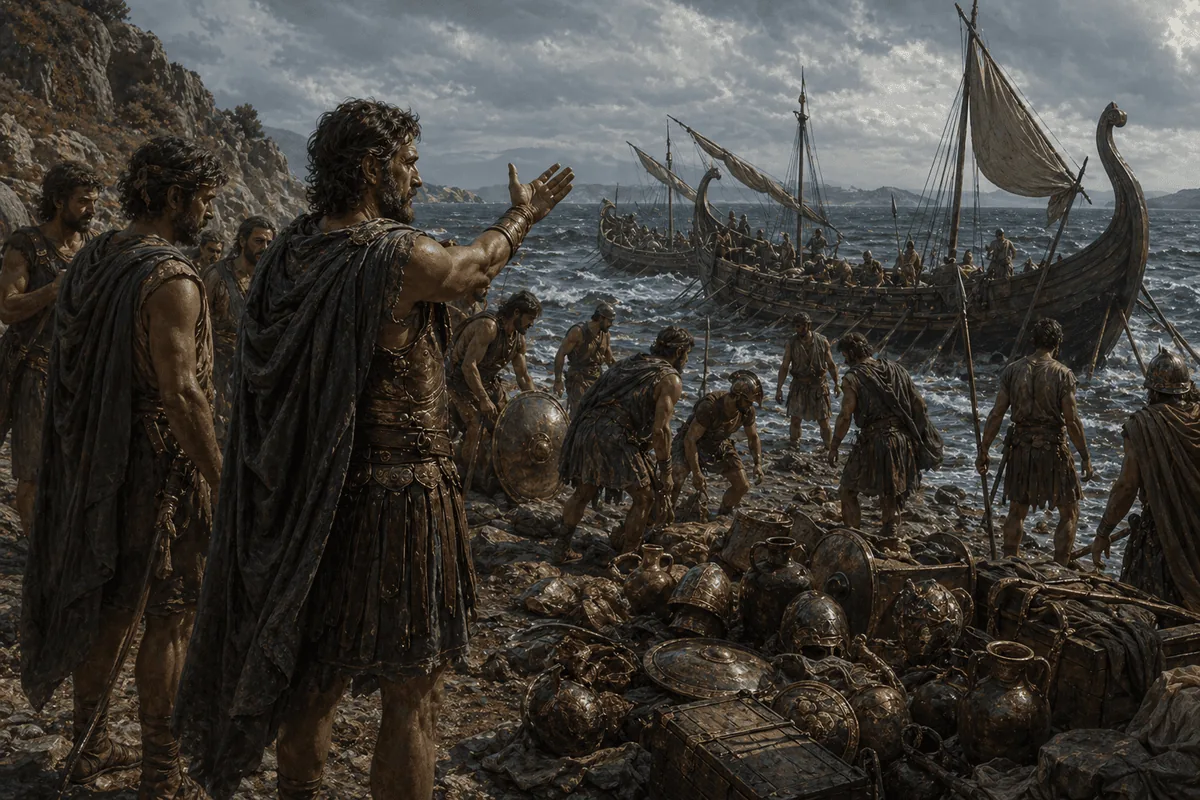
Odysseus' first mistakes

Place / axis: Thracian coast (Ismaros) · return begins

Odysseus wins the war, but the road to Ithaca demands something other than victory: discipline and restraint.

  • The early mistakes set the tone for the rest of The Odyssey.
  • The ship becomes a microcosm where human weaknesses are revealed.

Film reading: Each stop can become a mini-scene that is both spectacular and political.

Consequence: The return begins with the difficulty of commanding one's own men.

Odyssey contextreturn theme anchor
Group of sailors facing the first stop of the wandering

Wandering

Step 9

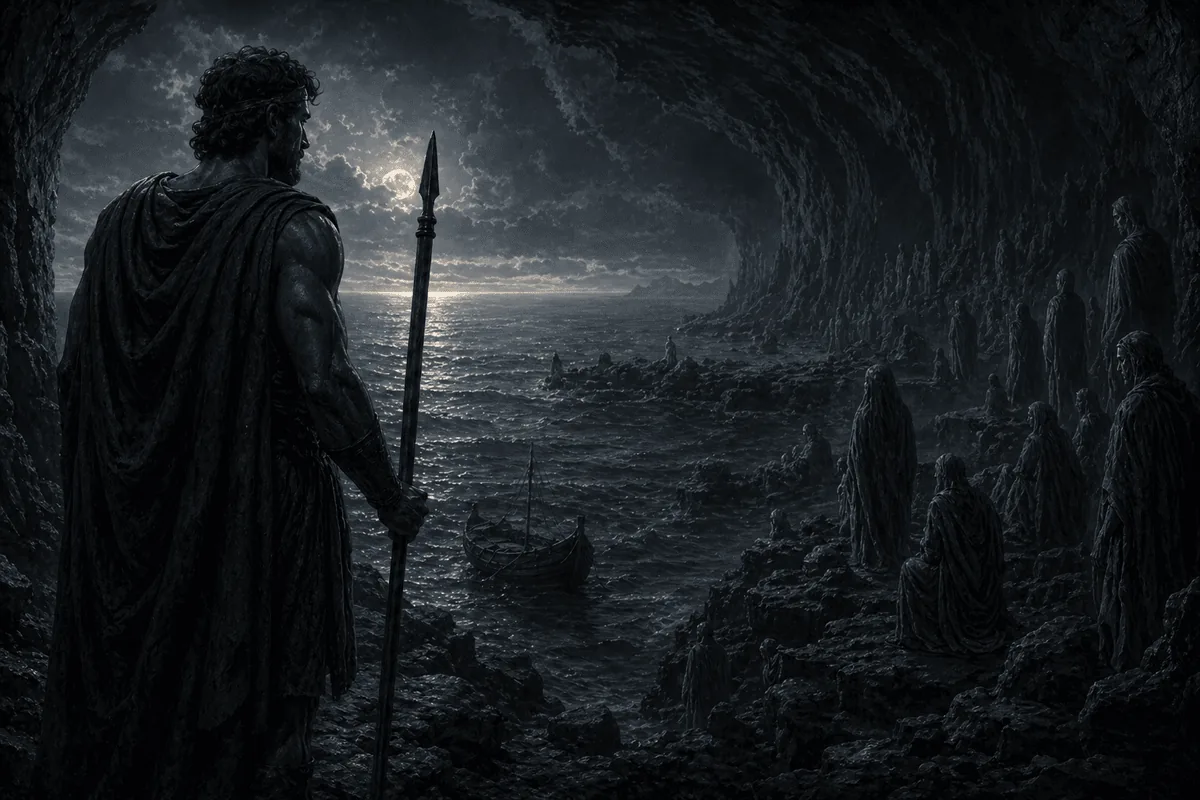
The descent to the Underworld

Place / axis: Realm of the dead · inner trial

Beyond the geographical voyage, Odysseus faces what would follow him everywhere: memory, fault and finitude.

  • The crossing puts bravery at a distance from its usual heroism.
  • The dead say less what war is than what glory costs.

Film reading: The contrast between daylight and the shadow realm can structure the sequence.

Consequence: This scene justifies the theme of reconstructing identity from within.

Odyssey contextinitiatory moment
Entrance to a realm of shadows on a night sea

Wandering

Step 10

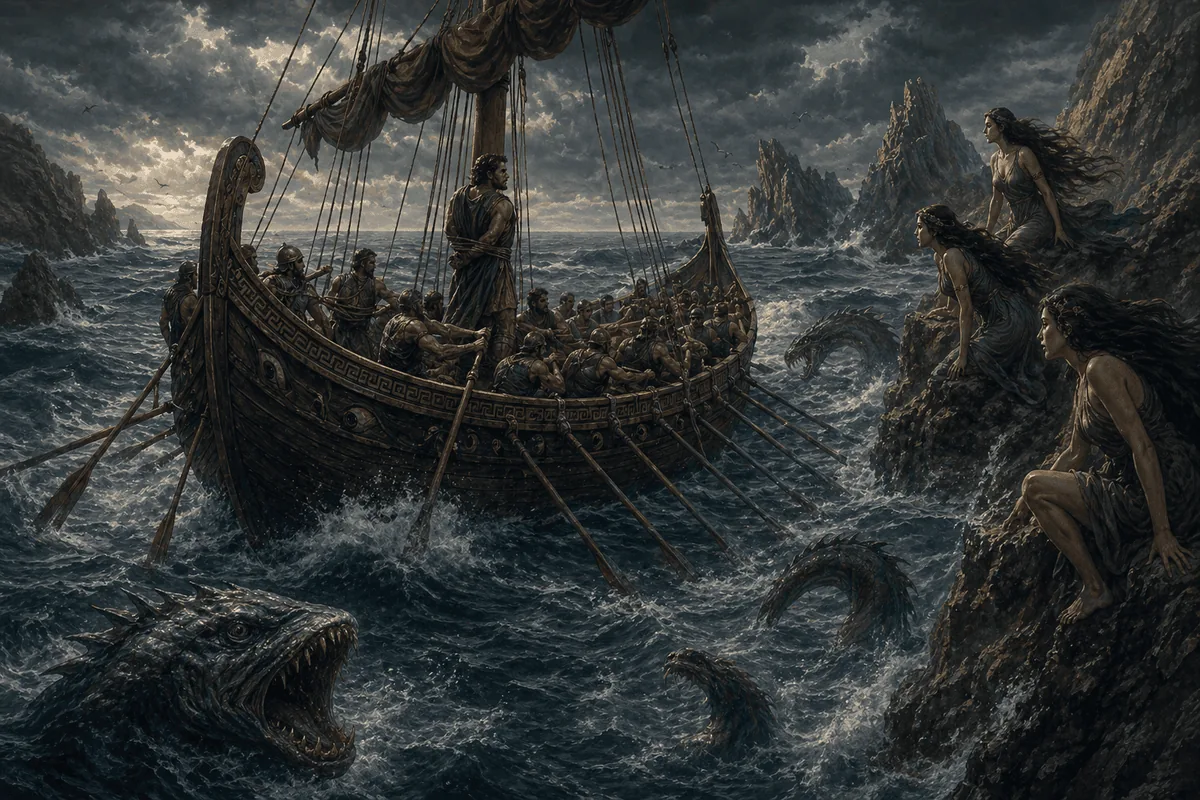
Sirens, monsters and thresholds

Place / axis: Eastern Mediterranean · mental survival

The passage through danger becomes a study of temptation, noise and organized fear.

  • Each obstacle measures Odysseus' ability to resist his own desirability.
  • Navigation is never purely technical: it is ethical and psychological.

Film reading: The film can use sound as the main dramatic line.

Consequence: The hero does not only defeat enemies; he learns what he must accept losing.

central mythsensory reading
Stylized representation of the Sirens at sea

Return

Step 11

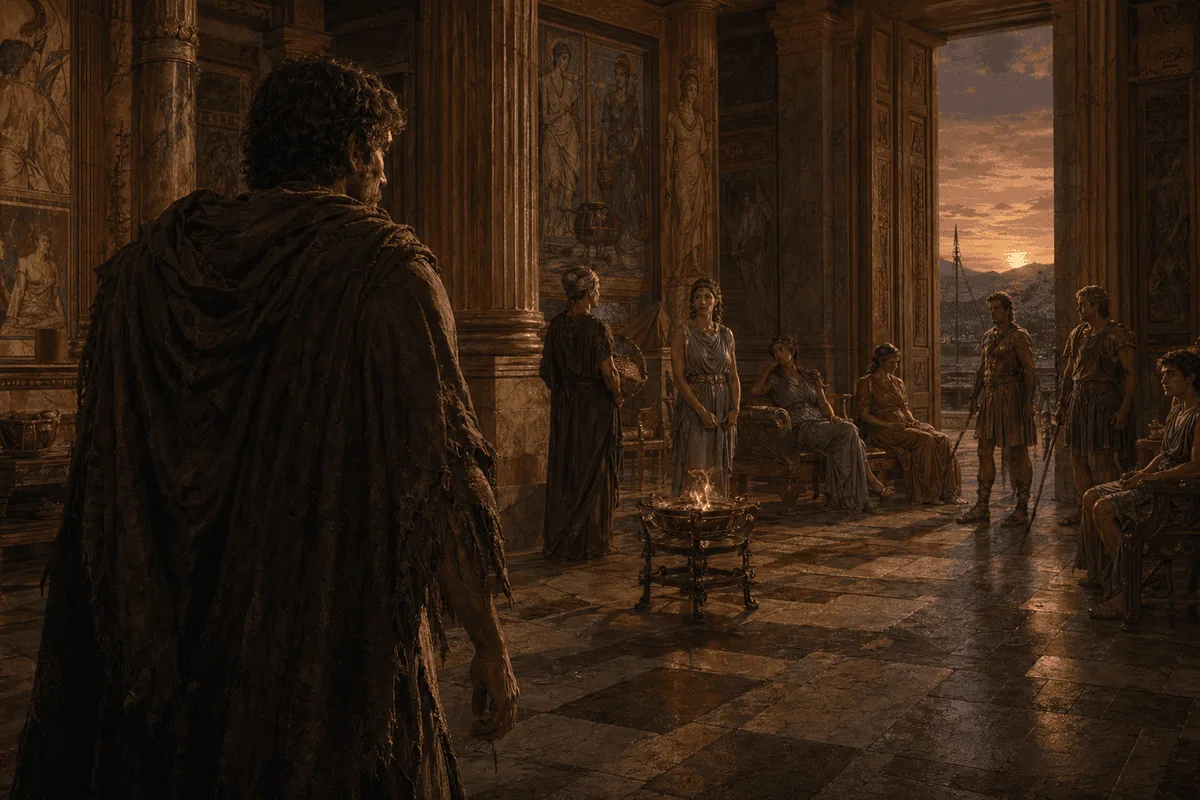
The return to Ithaca

Place / axis: Ithaca, Odysseus' palace · resolution

The voyage ends in a chamber of truth: recognizing one's name, wife and people.

  • The stranger's disguise becomes a strategy for reading the truth of others.
  • Power is no longer mainly external; it is the force of restored order.

Film reading: This return gains intensity if the tension is built scene by scene up to the decisive gesture.

Consequence: The Odyssey closes on a central question: to return is also to become ruler again.

Odyssey contextfilm key
Symbolic view of the palace of Ithaca at dusk

Reading depth

What this page adds

The timeline is not a neutral chronology. It is a chain of causes: divine quarrel, Paris' choice, Helen's displacement, coalition politics, Achilles' anger, the horse, Troy burning, then the return that refuses to become simple homecoming.

Each event is there because it changes what can happen next; the line is less a date list than a map of debts, choices and consequences.

That cause-and-effect reading matters more than exact dating: the myth is organized by wounds that continue to act.