Hisarlik and museums

Real World

Anchoring the myth in places, objects and sources gives it ground again: Troy becomes a landscape, not only a name carried across centuries.

The question is not only: "Did Troy really exist?" The better question is subtler: what can an archaeological site confirm, what does a poem transform, and where does legendary memory begin?

The real-world layer rests here on three points: Hisarlik, the Dardanelles and objects preserved in museums. Together they give the story a floor. They do not weaken the myth; they simply keep everything from being mixed together.

That distinction is important for the whole site. Troy can be a real landscape, a stratified archaeological problem, a poetic city, a memory of conflict and a cinematic image at the same time. The point is not to choose one layer against all the others, but to know which layer is speaking.
Associated site Hisarlik
Landscape Dardanelles
Reading thread Layers read together

Real map

Hisarlik, near the Dardanelles.

The point marks the archaeological site of Troy in Çanakkale province. The Dardanelles are the nearby maritime passage between the Aegean Sea and the Sea of Marmara.

Troy / Hisarlik site Çanakkale province, Turkey Near the Dardanelles

Visual anchors

Places, not only ideas.

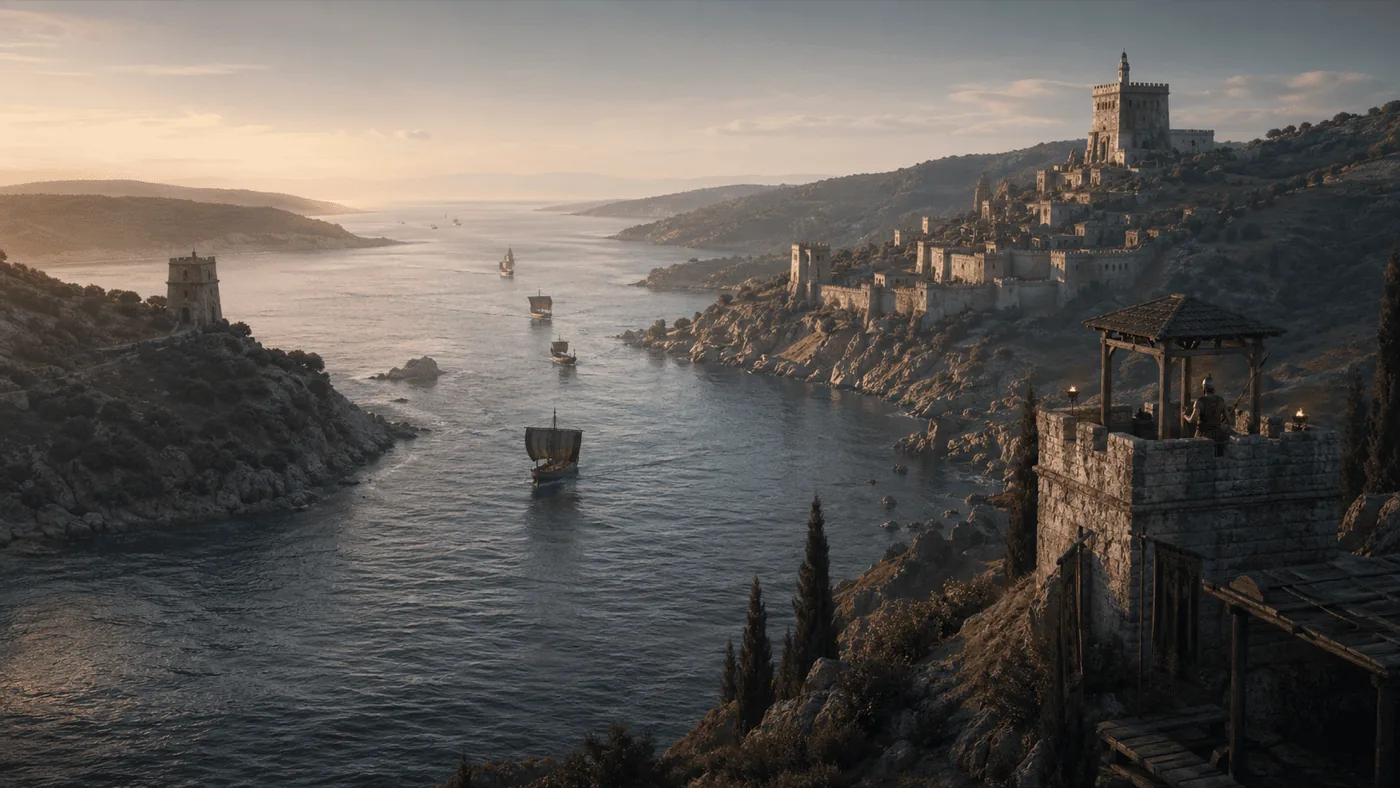
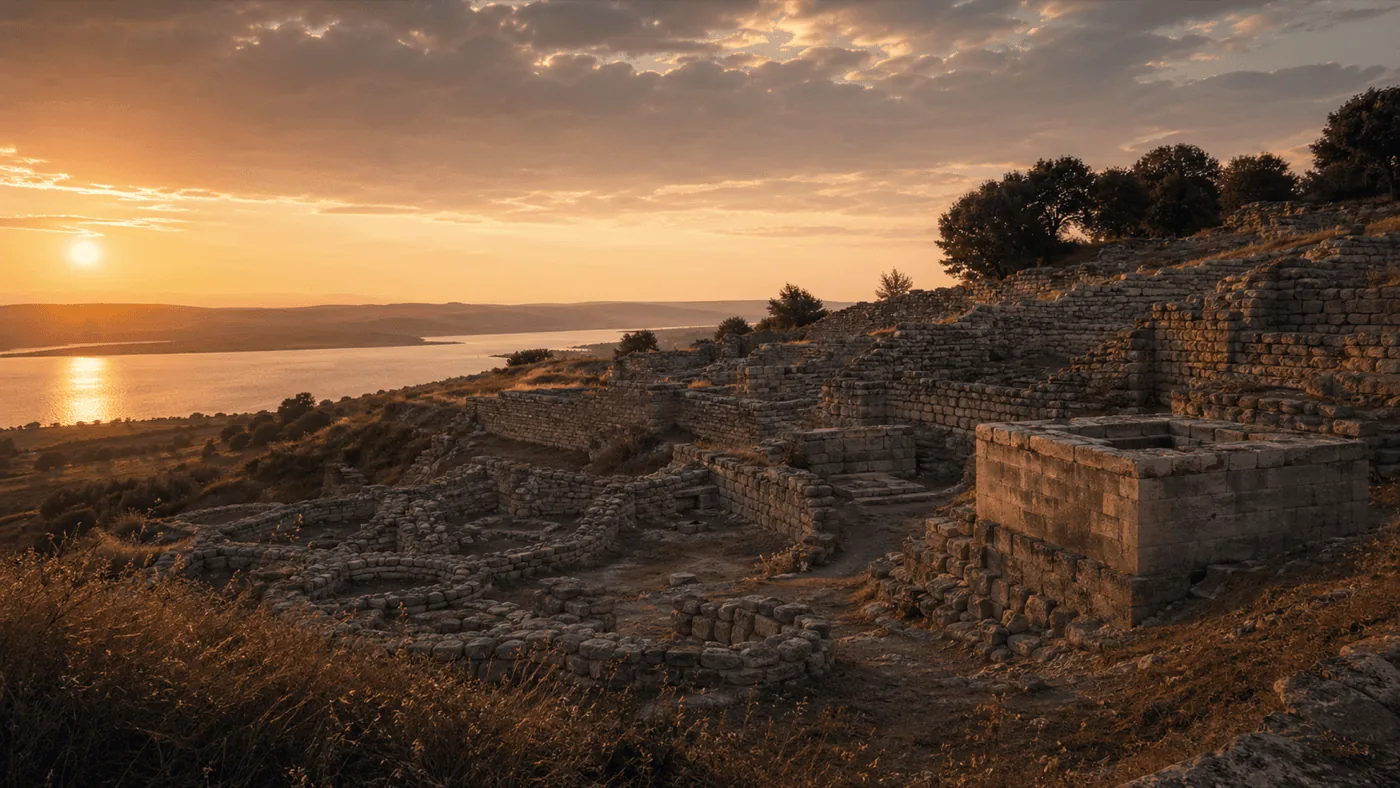
Stylized view of Troy's archaeological landscape at sunset.
Hisarlik The archaeological site

Ruins, layers and thresholds: the place where Troy stops being only a literary name.

Visual interpretation of the Dardanelles between sea and relief.
Dardanelles The maritime passage

Geography explains why this place could become strategic: a threshold between worlds, routes and powers.

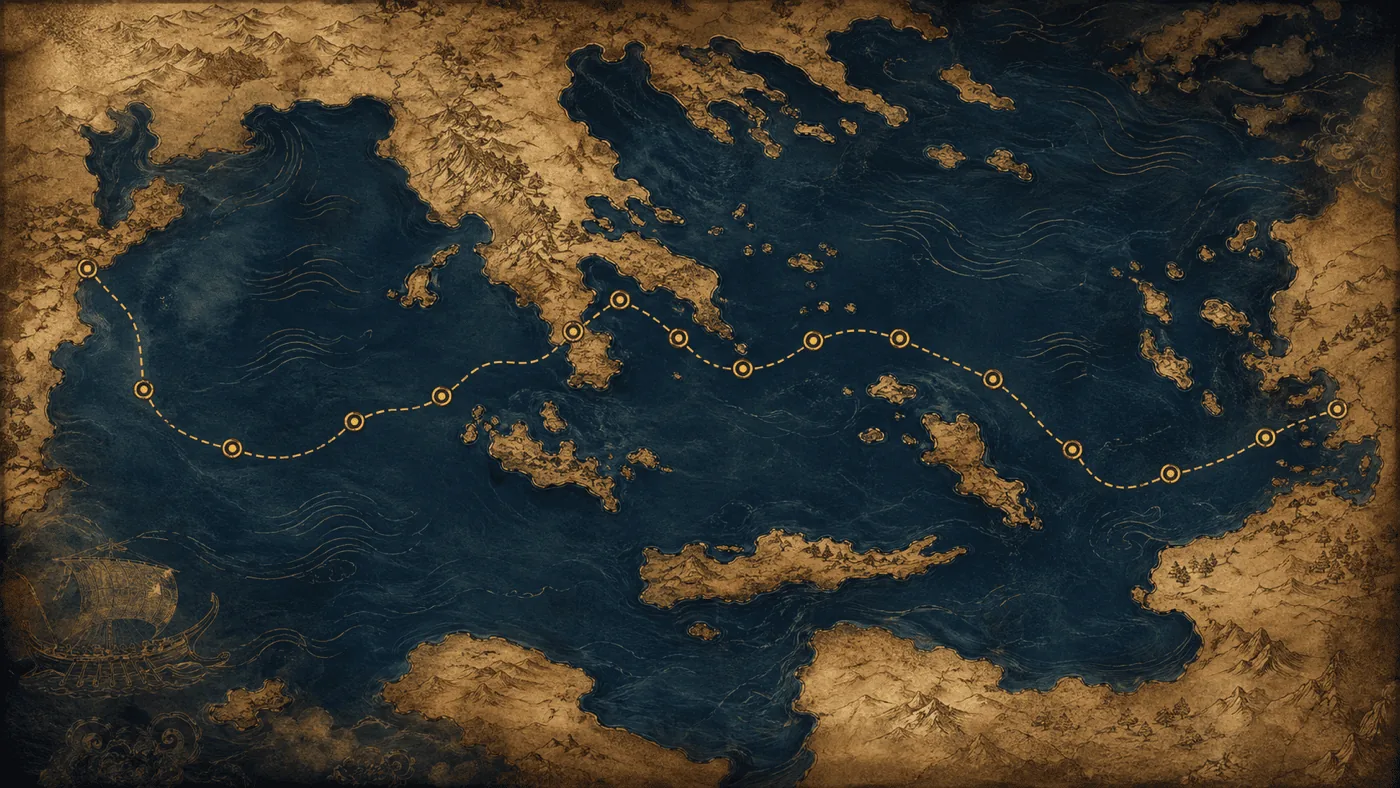
Illustrated map of the eastern Mediterranean and Odysseus' journey.
Map Myth as space

The map helps read the journey as a symbolic structure without pretending to fix every stop precisely.

Concrete anchors

Where myth touches ground.

Site

Hisarlik, in modern Turkey

The place associated with Troy is the mound of Hisarlik, near the Dardanelles. Several cities were built and rebuilt there, layer after layer, which explains why the Troy of epic tradition remains a careful archaeological question.

Passage

The Dardanelles

Troy's position is not incidental. It sits near a maritime threshold between the Aegean, the Sea of Marmara and routes toward the Black Sea: a landscape where trade, war and control of passage all become plausible.

Method

Read without collapsing layers

Archaeology does not turn The Iliad or The Odyssey into exact chronicles. It gives material layers, fortifications, occupation traces and hypotheses; the poem organizes inherited memories into heroic narrative.

In the myth

A cursed city, visible gods, an impossible journey.

Troy burns because human cunning forced the gates open. The sea then becomes the domain of Poseidon, monsters, nymphs and thresholds where Odysseus risks forgetting his name, his crew and his return.

In the real world

Hisarlik, the Dardanelles, excavations, museums.

The archaeological site of Troy is linked to the mound of Hisarlik, near the southern entrance to the Dardanelles. It is the perfect anchor for separating myth, memory and material history.

Troy keeps several visible layers.

The same name moves through different realities: a city sung by poets, a hill excavated at Hisarlik, a landscape near the Dardanelles, objects preserved in museums, then recent images that keep feeding the imagination.

The point is therefore not to reduce Troy to one answer. It is to follow the way a real place, a memory of war and a great story answer one another across time.

Levels of certainty

What we can say without cheating.

Solid ground

  • A major archaeological site exists at Hisarlik.
  • It occupies a strategic position near the Dardanelles.
  • The place has multiple phases of occupation and destruction.

Still debated

  • Which layer best matches the Troy of epic tradition.
  • How far historical conflicts stand behind the heroic story.
  • The exact balance between memory, poetry and later recomposition.

What to avoid

  • Using archaeology as proof of every scene in the poem.
  • Turning Odysseus' route into an exact tourist itinerary.
  • Mixing ancient objects, later traditions and modern film choices.

Read this page as a method page as much as a geography page. Hisarlik gives the story a place; the Dardanelles explain why that place could matter; museum objects show how ancient people pictured and transmitted the myth. None of that reduces Homer to a report. It makes the distance between evidence and poetry more visible.

Museums and objects

Seeing the myth differently.

Museums are not just illustrations of the text. They show how Greek stories moved through objects, images, gestures and visitable places.

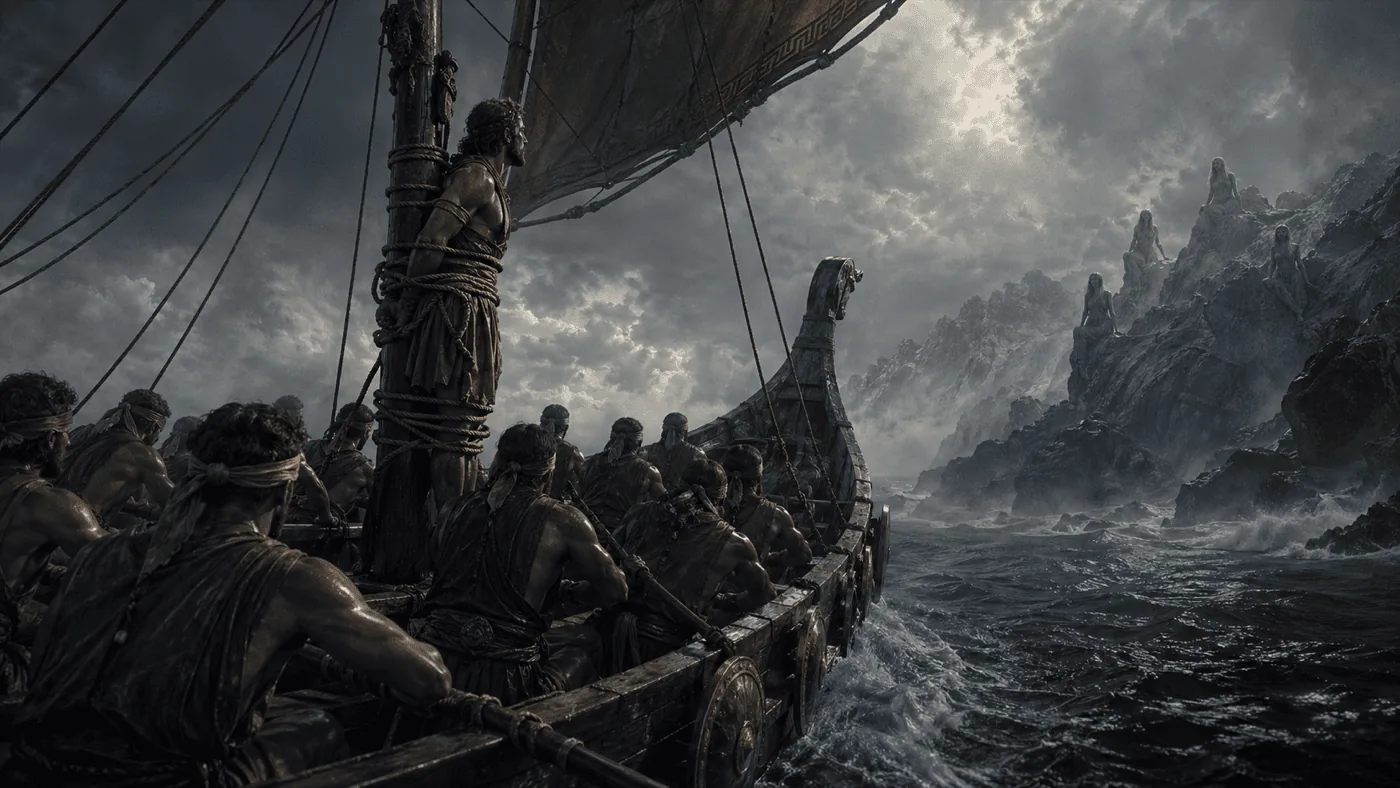
Odysseus facing the Sirens, a stylized image inspired by the ancient episode.
Ancient and recent images make episodes visible: they do not prove the story, they show how it was imagined.
1

The Troy Museum

To connect the story to the terrain, the museum and the hill of Troy make the landscape, occupation layers and objects visible, giving material presence to Trojan memory.

2

Vases and images of Odysseus

Episodes of The Odyssey also circulate through ancient images. A vase with Odysseus and the Sirens does not prove the episode; it shows how Greeks visualized and transmitted it.

3

Texts as the base

Homer remains the narrative foundation. Museums and archaeology add concrete markers, but they do not replace reading the poem.

Remember

The real world gives the story thickness.

Troy matters because it gathers several forms of memory: a great poem, an excavated hill, a strategic landscape, ancient images and now a new film adaptation.

Reading The Odyssey with these markers makes the journey more concrete. We follow Odysseus through myth while feeling the places, objects and traces that give the story visible presence.

Reading depth

What this page adds

The real-world page exists to slow down the easy confusion between poem and report. Troy, Hisarlik, the Dardanelles, museums and archaeological layers do not prove every narrative detail, but they give myth a material thickness.

That thickness changes the reading. Once the landscape is visible, Troy is no longer only an abstract city of beauty and betrayal; it becomes a strategic threshold, a memory site and a place where scholarship, tourism and imagination still meet.