The Iliad does not tell the whole war.
The poem concentrates on a late crisis in the tenth year: Achilles' anger, fragile alliances, then the collision with Hector.
 From Troy to Ithaca
 Things worth knowing
The most surprising facts about The Iliad and The Odyssey are not mere curiosities. They show how these poems were sung, fixed, translated, disputed and carried into everyday language.
Keep in mind
These facts are useful because they correct the reflex to treat Homer as a fixed modern book with a single clean mythology around it. The poems come from performance, later editing, translation choices and a long reception that keeps adding familiar images back onto the ancient text.
The poem concentrates on a late crisis in the tenth year: Achilles' anger, fragile alliances, then the collision with Hector.
The numbered books we read today belong to a later editorial history, not to a table of contents fixed in advance by Homer.
Epithets, type-scenes and formulas are not filler. They come from a performed tradition, learned, varied and transmitted aloud.
The great trap belongs mainly to the Trojan cycle and later tradition. The Iliad itself stops before the city falls.
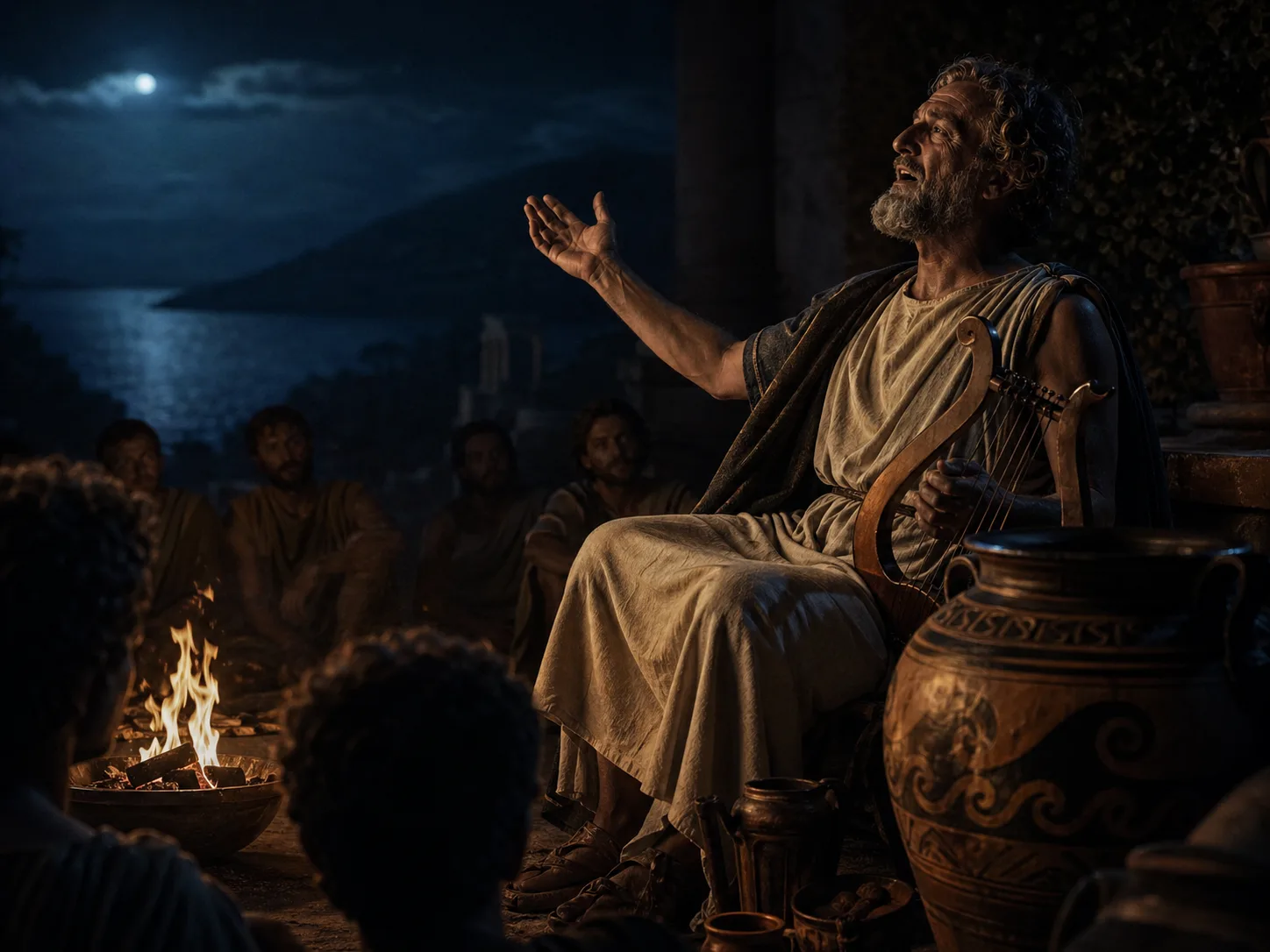
Orality
When an epithet returns, when one scene resembles another, when a gesture feels ritualized, the poem is not running out of imagination. It is showing its origin: speech composed to be heard, remembered, varied and recognized by an audience.
That idea changes the reading. Epic is not only an old book; it is the trace of a long living performance, slowly stabilized.
It also explains why a repeated phrase can feel powerful rather than lazy. The listener recognizes a formula, hears a pattern return and understands that the singer is working inside a shared poetic system.
Corrections
Tradition often blends The Iliad, The Odyssey, the Trojan cycle, Virgil, tragedy and two thousand years of commentary. That mixture is fascinating; the useful move is knowing when sources cross.
This does not make later tradition less interesting. It simply prevents a common mistake: blaming Homer for details that belong to another layer of ancient or modern reception.
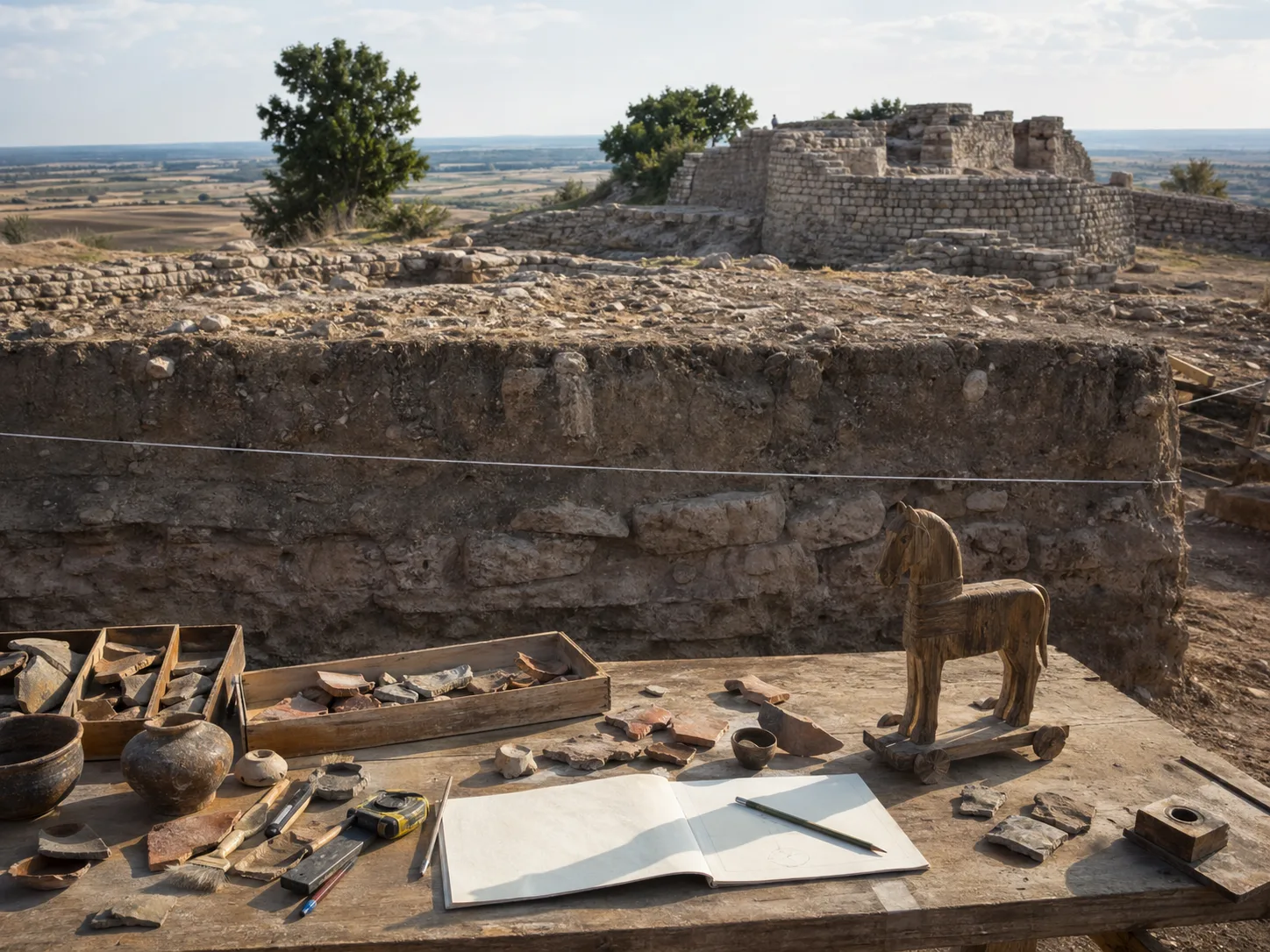
Troy on earth
Archaeology gives a ground, layers, ruins and a geography. It does not hand us a simple validation of the story, as if Hector, Achilles and Odysseus had walked straight out of an excavation register.
The real tension lies there: a real place, epic memory, scholarly reconstructions and popular images that do not always move at the same pace.
That tension is exactly what makes Troy fascinating today. The site invites historical questions, while the poems keep working through honor, grief, return and reputation.

Legacies
"Odyssey", "mentor", "Achilles' heel", "Trojan horse": the most everyday inheritance is often lexical.
A film may save the war, a game the strategy, a play the singer's voice, a novel the hidden wound of a secondary figure.
Joyce, Walcott, Atwood or Madeline Miller do not merely copy Homer. They change the focus and ask who gets to tell the story.
Useful sources
To dig without blurring layers: Loeb Classical Library, Oxford, Cambridge guides to Homer, UNESCO and the British Museum for Troy, then official publisher or producer references for recent adaptations.