
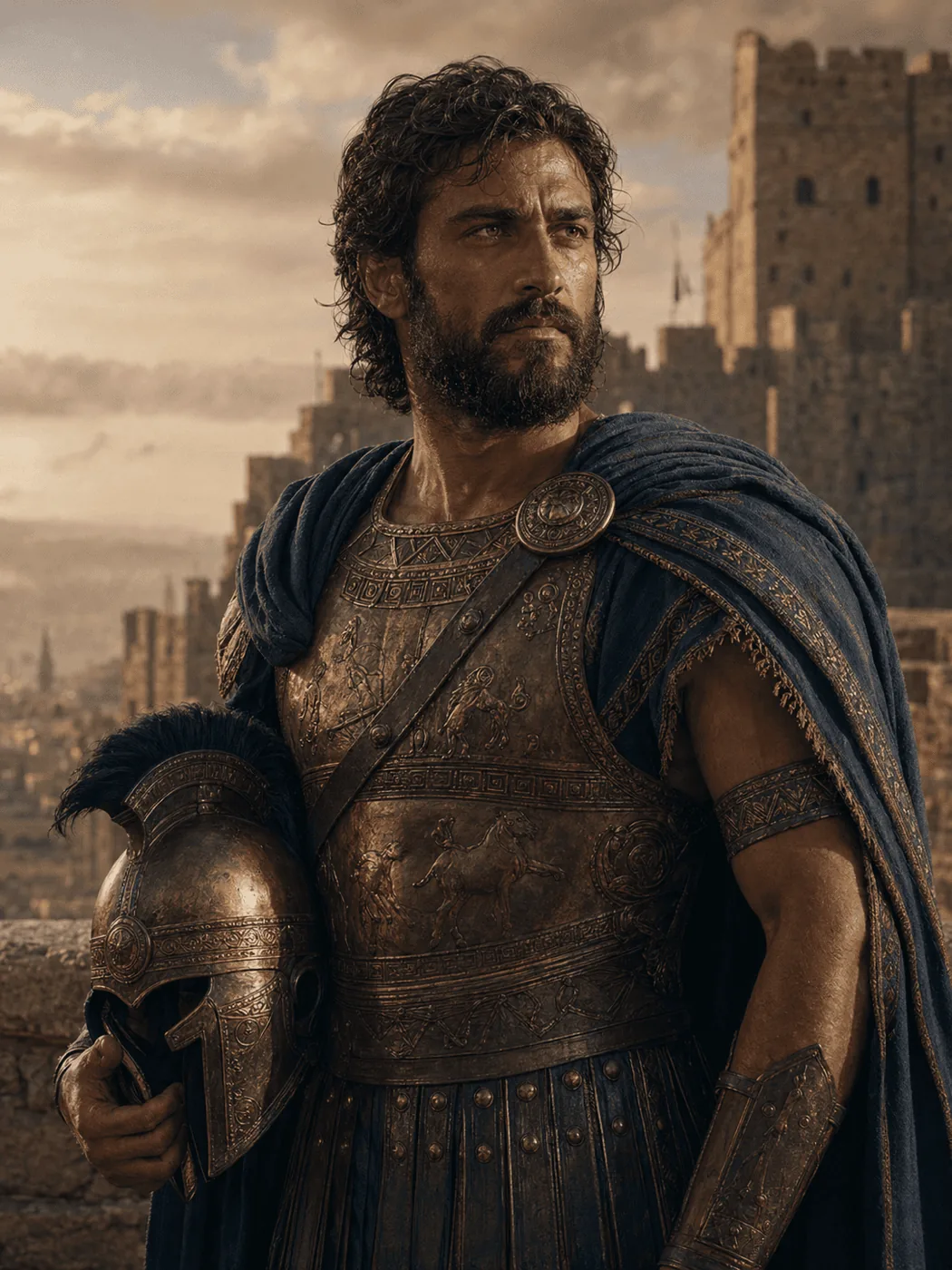
Hector gives a political face to the defense of Troy: he is not only a model of courage, but a decision-maker constrained by the city. His heroism is less flamboyant than Achilles', but more immediately human.
He carries the war from inside the besieged city. Where the Greeks seek prestige, revenge or return, Hector defends a house, a father, a wife, a child and a community already threatened with erasure.
The burden of a leader
He holds both the military front and the family cell. His leadership is born from a balance between military urgency and civic duty. Hector is not an isolated warrior: he is a king's son, a brother, a husband and a father. Each of these positions obliges him. His greatness comes from this accumulation of duties, which makes any truly free choice almost impossible.
A morality of restraint
Hector is not naive: he knows the cost of war and the vulnerability of his choices. His prudence does not prevent heroism; it makes it tragic. Unlike Paris, he measures the collective consequences of individual desire. Unlike Achilles, he cannot withdraw for long from combat in order to defend personal honor. His place obliges him to hold, even when holding becomes a form of condemnation.
Family as tragic center
Hector's family scenes give Troy its most moving depth. With Andromache and his son, war stops being only a clash of heroes: it becomes a threat to generations. That is why Hector makes the fall of Troy morally complex. The reader or viewer can understand the Greek victory while feeling that it also destroys a habitable world made of rites, ties and loyalties.
Why his shadow remains
In the logic of The Odyssey, Hector remains a silent reference: the greatness of the victors never erases the work of those who held a city in the name of a people. His memory weighs on Odysseus' return. After Troy, the Greeks do not come back only with victory; they come back with the shadow of those they defeated and with the question of what that victory cost them.
The nobility of defeat
When the city empties, his name remains. He is one of the few Trojan figures to keep a lasting moral coherence. Hector embodies the defensive hero, the one who does not first seek conquest, but tries to prevent collapse. His greatness comes from there: he is condemned, yet he gives Troy a dignity that destruction cannot cancel.