
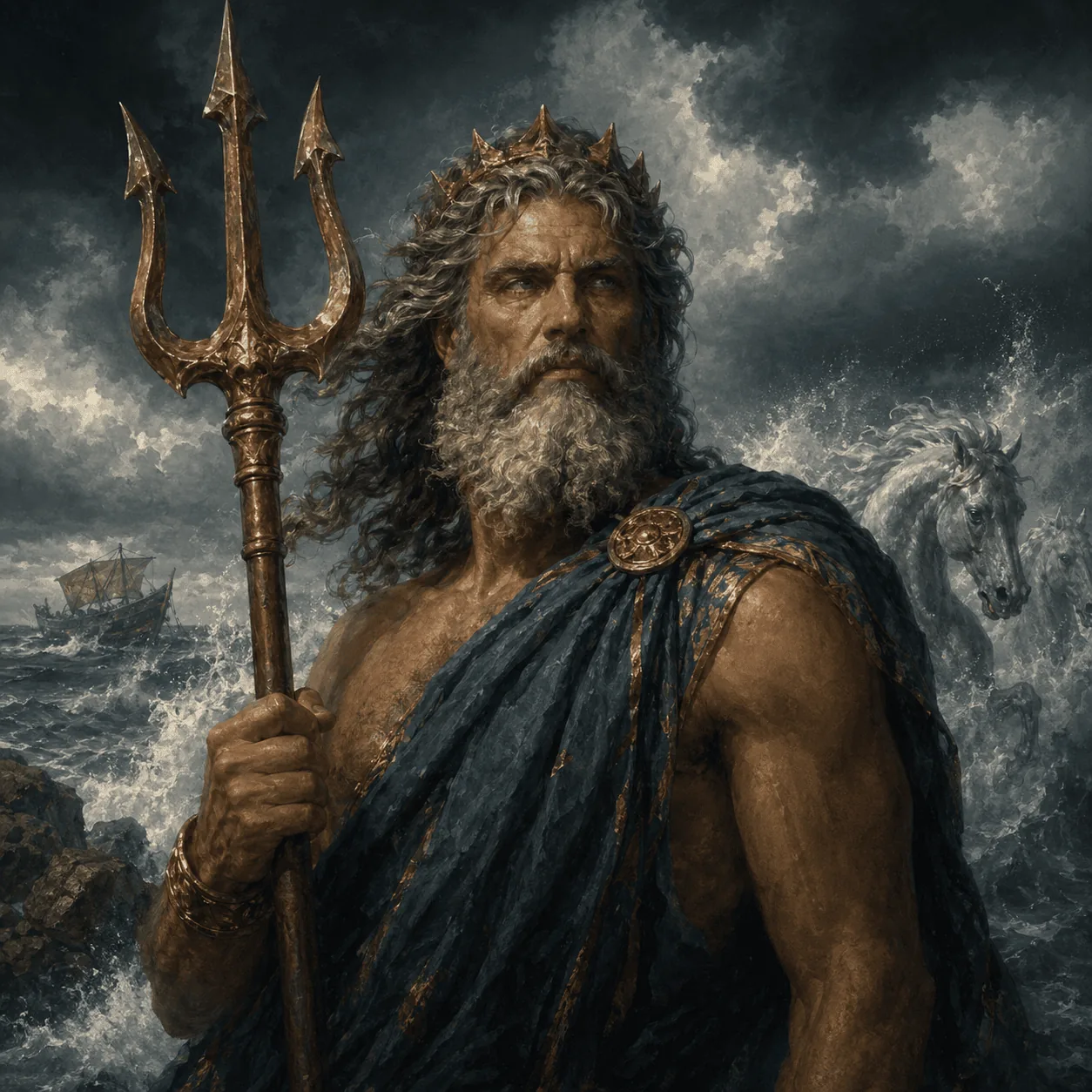
Poseidon is not an abstract obstacle. His anger comes from a family wound: his son Polyphemus has been blinded. From that moment, the sea stops being only a space to cross. It becomes the territory of an offended god, a power able to delay, scatter and almost erase Odysseus' return.
The anger after Polyphemus
Odysseus escapes the Cyclops through cunning. He first calls himself "Nobody", makes Polyphemus drunk, blinds him, then leaves the cave hidden beneath the rams. But as he departs, he reveals his true name. This proud gesture gives Polyphemus the possibility to call on his father Poseidon and ask for vengeance. Odysseus' fault is therefore not only that he wounded the Cyclops. In the poem's logic, he also yielded to the pride of signing his exploit.
The sea as adversary
With Poseidon, the sea becomes almost a character. It rises, delays, breaks ships and carries Odysseus away from Ithaca at the very moment when the goal seems possible. The god does not need to be present in every scene to weigh on the journey: his domain is enough to maintain the threat. This hostility gives The Odyssey its particular tension. Odysseus does not fight only isolated monsters; he faces an entire space governed by a power hostile to him.
A personal conflict
The relation between Poseidon and Odysseus is personal, almost familial. Poseidon defends his son even if Polyphemus is himself brutal and monstrous. The poem does not build a simple justice. It shows a world where divine blood ties can weigh more heavily than moral guilt. That makes Poseidon very different from Zeus. Zeus arbitrates and sanctions violations of sacred order; Poseidon pursues a precise revenge.
Facing Athena
Athena wants to bring Odysseus home. Poseidon wants to prevent him from returning. This opposition structures much of The Odyssey. On one side, intelligence, disguises and prepared encounters; on the other, storm, wandering and elemental force. Odysseus stands between these two powers. He is cunning enough to survive, but not powerful enough to abolish the sea.
The debt of the sea
Poseidon is the major enemy of Odysseus' return. He gives the voyage its dimension of struggle against the elements, but also against the consequences of an arrogant word. His anger turns a victory over Polyphemus into a terrible debt. With him, The Odyssey recalls that a successful ruse can still cost dearly if followed by provocation. The sea becomes memory in motion: every delay, wreck and detour repeats that the hero cannot simply sail away from what he has named.