
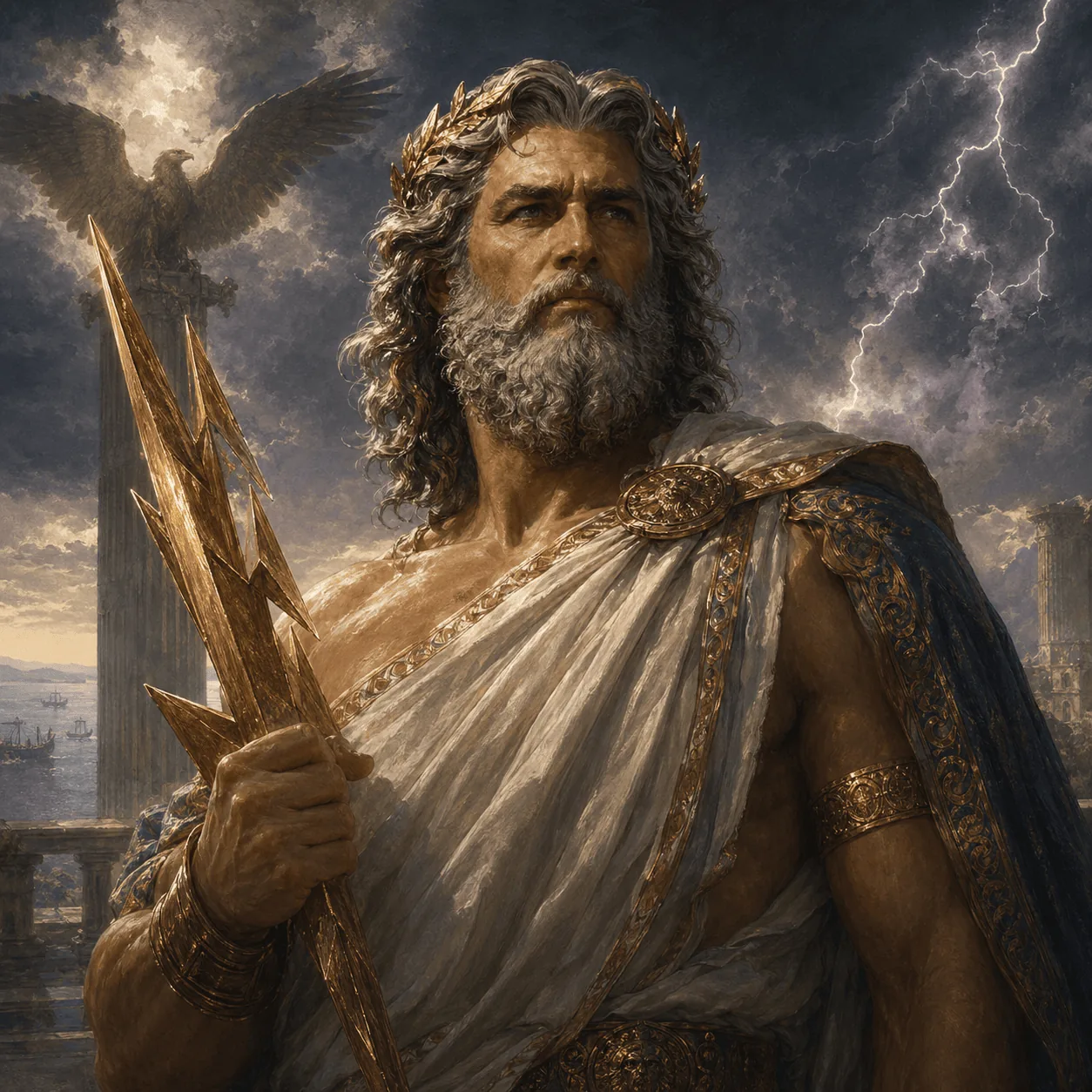
Zeus maintains the balance between divine whims, human faults and the necessity of fate. He is not simply the strongest god. He is the one who arbitrates, authorizes, limits and sanctions. In The Odyssey as in the Trojan cycle, his presence gives the world a structure: men can act, gods can intervene, but everything cannot collapse into pure disorder.
The sovereign of Olympus
Zeus occupies the superior place among the gods. Other powers discuss, contest, negotiate or try to influence him, but his agreement remains decisive. Athena pleads for Odysseus before him. It is also through his authority that some punishments become effective. This position does not mean that Zeus is always simple or transparent. He can seem distant, sometimes ambiguous. He does not immediately save Odysseus or suppress Poseidon's anger; he keeps a frame in which consequences can unfold.
Justice and sacred limits
In The Odyssey, Zeus is linked to divine justice. Men are not punished at random. The suitors abuse hospitality, Odysseus' companions kill the cattle of Helios, and several characters cross religious or social limits. Zeus then acts as guarantor of a wider order. One of the poem's great themes is xenia, sacred hospitality. Welcoming the guest, respecting the host, not plundering another person's house: these rules belong to Zeus' order.
Zeus and Odysseus' return
Odysseus' return becomes possible because Zeus authorizes it. Athena can help, Hermes can carry the message, Calypso can let the hero depart, but this chain depends on a higher decision. Nostos is therefore not only the effort of a man: it is reinscribed within a cosmic order. At the same time, Zeus does not make the return an easy reward. Odysseus comes home late, alone and tested.
The thunderbolt against the ship
The episode of Helios' cattle shows Zeus' punitive face. After the companions' sacrilege, Helios demands repair. Zeus then strikes the ship with his thunderbolt. This destruction is terrible, but it answers a fault clearly established by the story. Odysseus survives, the companions die. The scene sums up a hard logic: one can travel with an exceptional hero and still die after violating sacred order.
The center of the sky
Zeus is the arbiter of the heroic world. He is not identical with Athena's benevolence, Poseidon's vengeance or Helios' demand. He holds together destiny, justice, divine hierarchy and sacred limits. Without him, The Odyssey would be a succession of adventures. With him, it becomes a story of order recovered after faults, excesses and wanderings. His distance is part of the point: the sovereign god rarely needs to fill the scene, because the structure of consequence already bears his authority and gives judgment its frame. Authority is felt before it is explained.