Who is it?
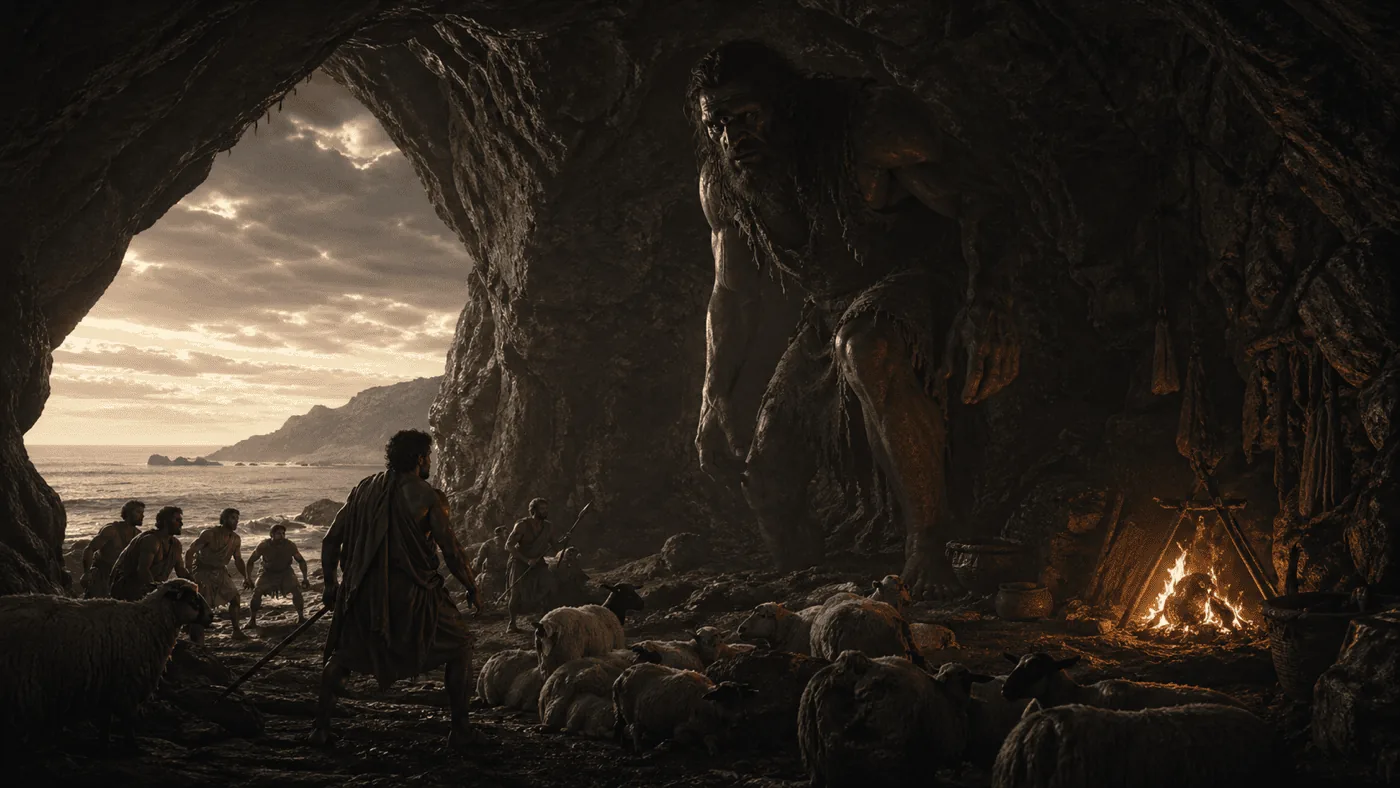
Polyphemus is a Cyclops, son of Poseidon. He lives outside cities, shared law and the rules of hospitality that structure the Greek world. His cave is not only a monster's dwelling; it is an anti-house, a place where welcome becomes predation.
He is huge, brutal and almost invulnerable to ordinary force. Yet his failure comes from underestimating speech, names, wine and cunning. The episode is frightening because brute strength is real, but it is not the only power in the scene.
Link with the story
In The Odyssey, the Cyclops episode is decisive. Odysseus enters the cave expecting hospitality, but finds a closed place where the host eats his guests instead of receiving them. The rules of xenia are not weakened there; they are inverted.
The escape is a victory of intelligence. Odysseus makes him drunk, calls himself Nobody, blinds him and slips out beneath the rams. But he then reveals his true name out of pride, and that error allows Polyphemus to call Poseidon against him.
What the monster means
Polyphemus shows what happens when xenia, sacred hospitality, is destroyed. The monster is not only violent; he is politically and morally outside the civilized world. He gives the poem an image of a house with no shared law.
He also reveals Odysseus' ambiguity. Cunning saves the survivors, but glory exposes them. The desire to be recognized transforms a local victory into a maritime curse, and the whole return will pay for that name shouted too late.