
AP reports a 91-day shoot across six countries, completed nine days ahead of schedule.
Morocco hosted Troy, while a Greek cave was used for the Cyclops.
Icelandic black sands were associated with Hades, and Favignana near Sicily stood in for Ithaca.
A real Draken-type vessel was modified for the production.
These details describe how the film was made; on their own, they do not reconstruct the final cut.
What the report allows us to establish
In its July 9 production report, AP follows the film's production and describes several location and logistical choices. The six-country figure covers the whole shoot; the four places below are those the article clearly connects to moments in the story.
That distinction matters. A filming location is not always the place named on screen, and its use during production tells us neither how long a scene will last nor what the edit will keep.
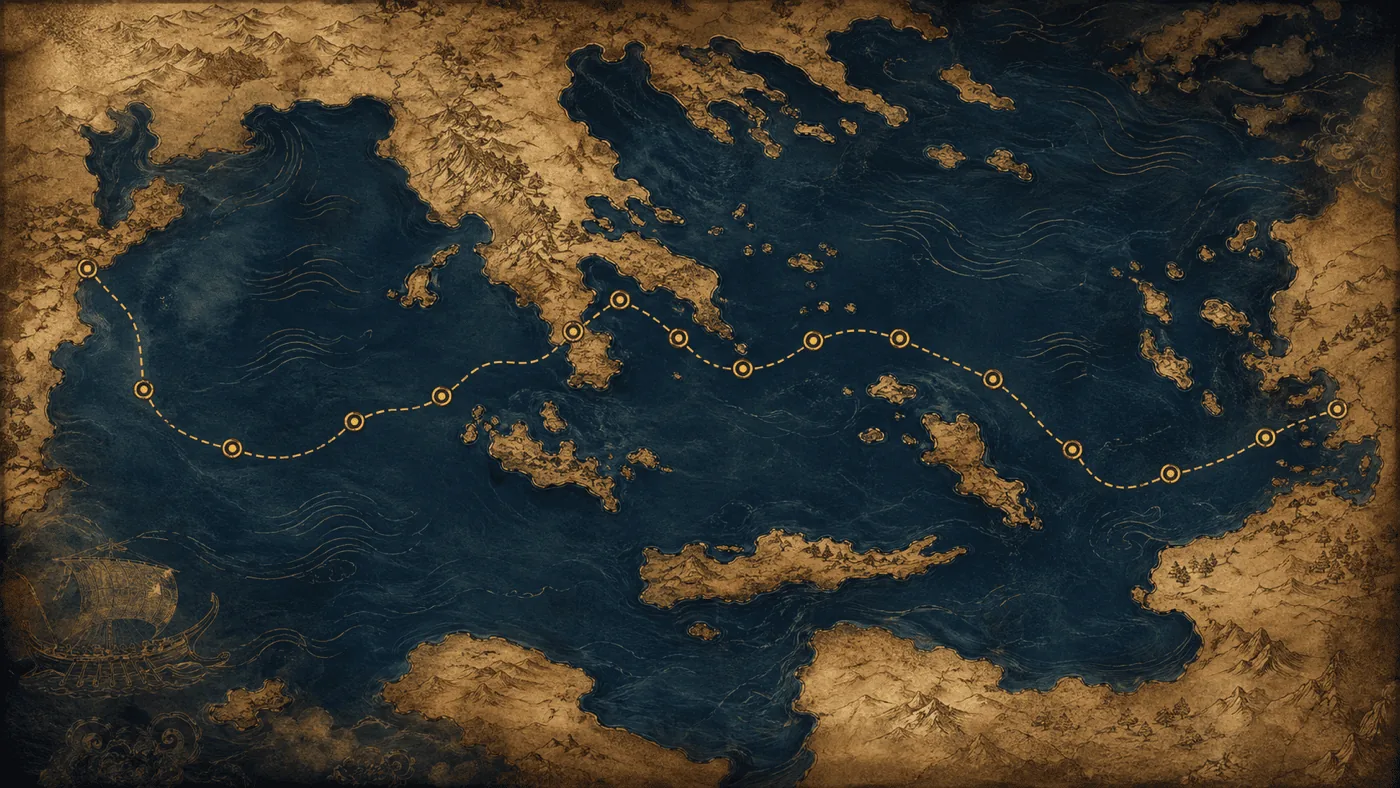
Four landscapes, four functions
Building Troy
AP reports that Troy was constructed in Morocco. This is a production fact, not yet a reliable indication of how long the Trojan opening will last or where it will sit in the narrative.
Entering the Cyclops' cave
A Greek cave was used for the Cyclops sequence. The natural setting brings the film close to Mediterranean rock and scale without revealing how Polyphemus will ultimately appear on screen.
Giving Hades a physical texture
The report connects Iceland's black sands with Hades. They may suggest a visual threshold between the living and the dead; that is an editorial reading, kept separate from the filming fact reported by AP.
Bringing Ithaca into view
Favignana, an island west of Sicily, stood in for Ithaca. It is therefore a substitute location and should not be confused with the Greek island of Ithaca or treated as a certain map of Homer's poem.
A real vessel, reshaped for cinema
AP also describes a real Draken-type vessel modified for the production. It gave the performers and cameras an object with weight, a working deck and physical constraints. It does not, however, establish which passages were completed at sea or how much visual-effects work may shape the finished images.
A production geography, not yet the geography of the edit
The complete map remains open until release and fuller production information. For now, the clearest approach is to preserve three levels: what AP reports, what the settings suggest, and what the finished film actually shows. The first is documented; the other two still require patience.