
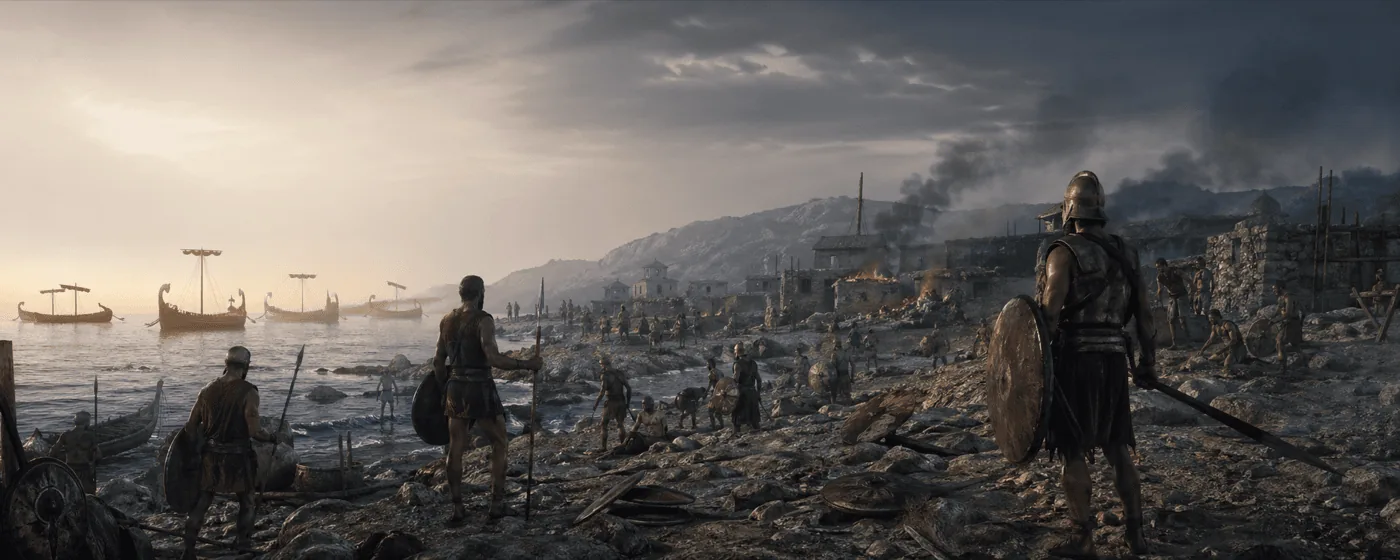
Coming out of Troy, Odysseus' men have not yet left the war. They have taken to the sea, but their gestures still belong to the camp: take, plunder, celebrate too soon. Ismaros appears as a first halt, almost ordinary. It becomes the first warning.
One celebration too many
The group lands in the land of the Cicones and plunders the city of Ismaros. The attack is followed by a pause of celebration: they take supplies, settle in, forget the immediate danger. That is where the tale turns. Naive confidence is not punished by the gods through revelation, but by time. The inhabitants return in force. Ciconian reinforcements counterattack, and the returning crew, scattered and confident, suffers heavily. The result is not one single instant disaster, but a clear weakening: human losses, fatigue, and a damaged command.
Learning to leave the war
This episode shows that nostos begins with a correction of behavior. The men have not yet passed from war mode to travel mode. As long as violence remains their first reflex, the sea becomes an extension of the battlefield. The lesson is direct: Odysseus must not only steer a ship, he must regulate a community that still confuses success with license.
The scene on screen
The scene calls for a gradual disintegration: first victory, then wine, then delay, finally the shock of returning fire. The great monsters will come later; here, danger already has a human face, the face of indiscipline and of men who do not yet know how to go home.