
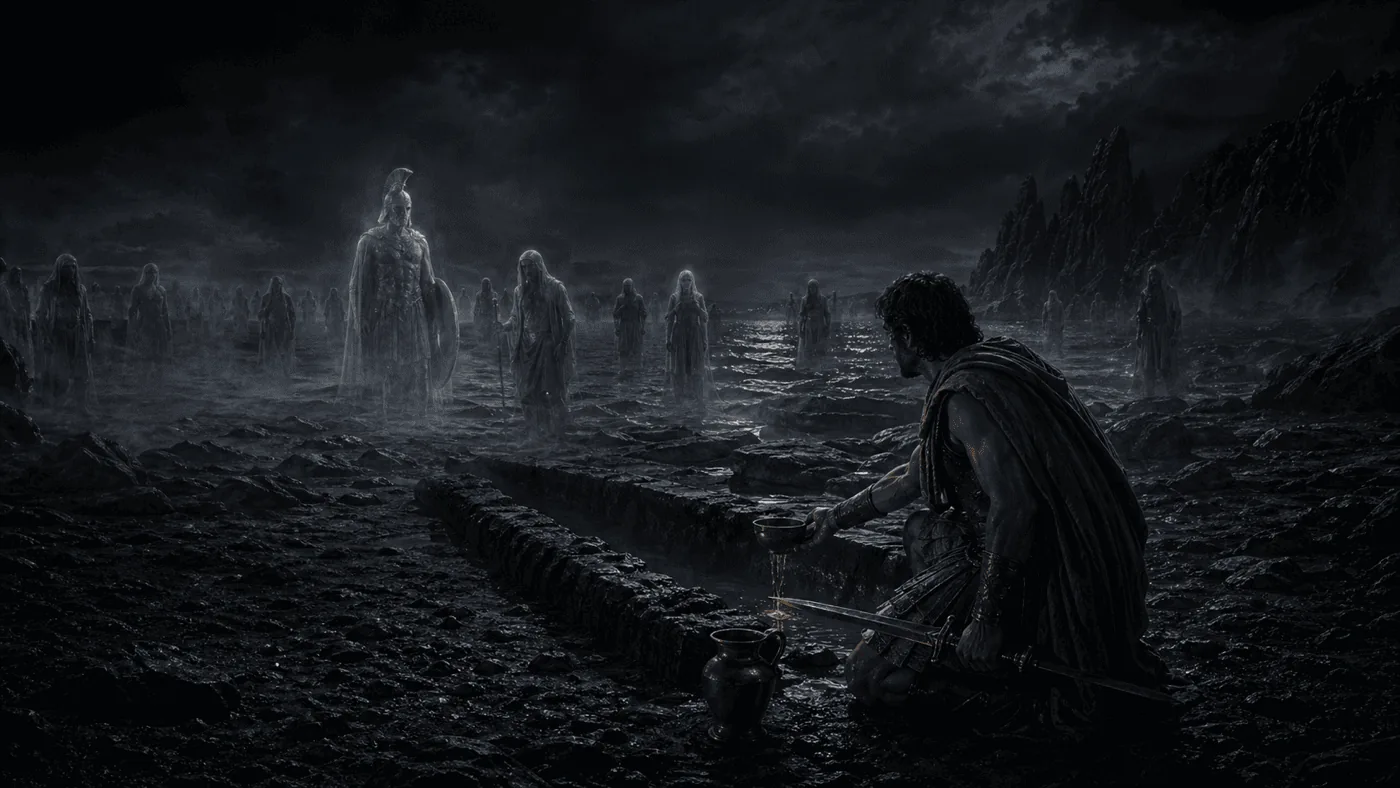
Odysseus' road suddenly descends beneath the road of men. No harbor, no cliff, no sail: only shadows, memory, and voices returning from war with a truth harder than victory.
Where the dead speak
At Circe's request, Odysseus goes toward the world below. He performs the ritual acts needed to call the shades, consults Tiresias, then meets decisive figures in succession, among them his mother, Achilles, Agamemnon, Ajax and others. The dead speak, but they are not reduced to information. Each encounter redefines his relation to the past: what he believed he knew about glory, fidelity, power or failure appears profoundly transformed.
The price of glory
The episode punctures the myth of abstract glory. Achilles admits that a humble and useful life may be worth more than posthumous fame. The past of the fighters is no longer a stock of victories, but a weight of omissions and griefs. The final information is crucial: to return, Odysseus no longer needs only a maritime plan. He must learn to carry the weight of those he does not bring back.
The scene on screen
A real descent to the Underworld could become the turning point of the whole narrative: less speed, more visual and sonic echo. Cinema gains force if the encounter with Achilles remains sober, almost political, rather than purely spectacular. The underworld should feel like the moment when adventure becomes memory and judgment.