
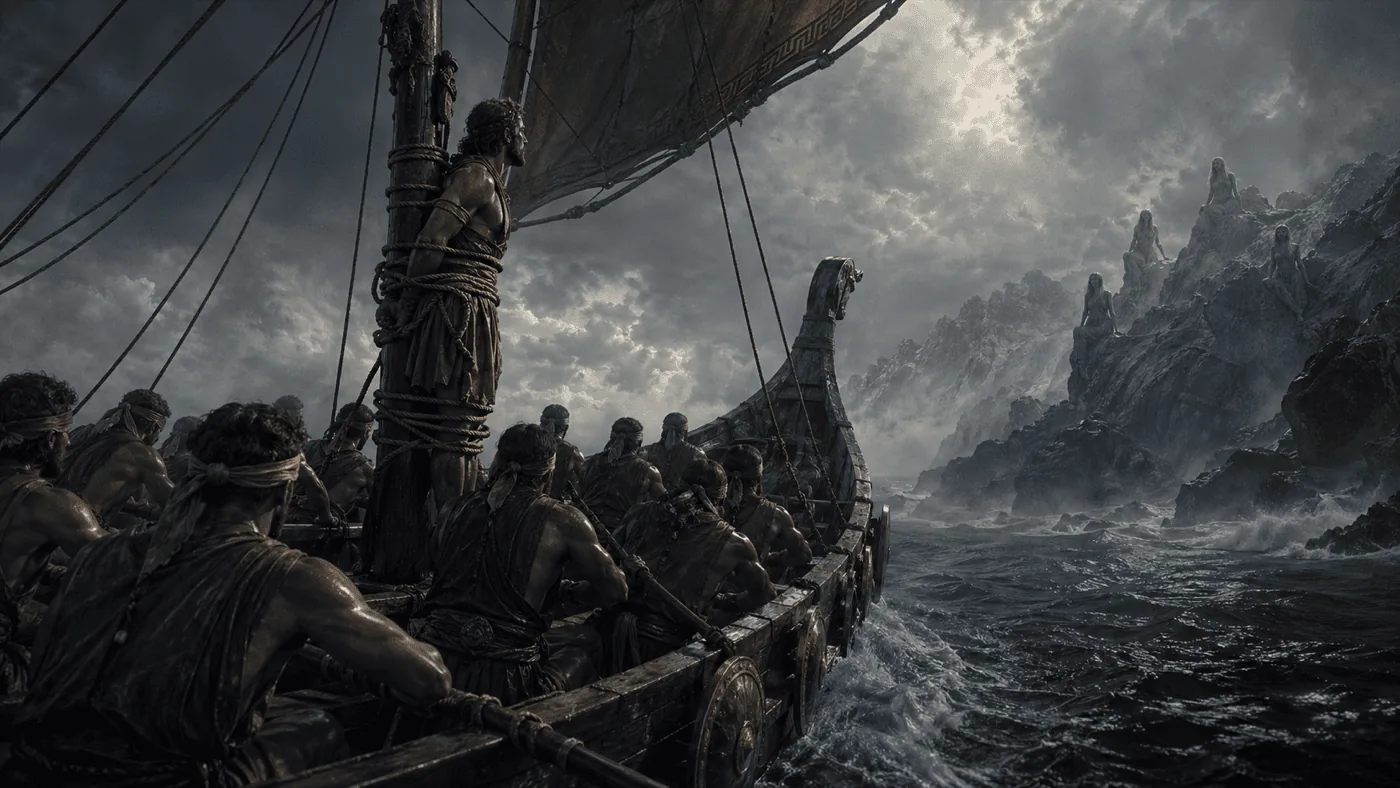
The sea grows calm, and that is a bad sign. Somewhere on the shore, voices promise more than beauty: they promise knowledge. Odysseus wants to hear. But he already knows that certain desires are not fought at the moment they arrive; they are prepared for before the crisis.
The song and the ropes
The Sirens offer a song reputed to reveal every truth. Odysseus understands that listening is a threat, because he cannot promise to restrain himself once he is drawn in. He therefore has his companions secured, fills their ears with wax and has himself tied to the mast. The scene produces a classic paradox: he seeks to know without being possessed. He listens, sees temptation, but does not touch the object of the song.
Binding oneself in order to remain free
This stage inscribes a form of practical wisdom: freedom sometimes requires a chosen restraint. Odysseus accepts placing his own control in the hands of his men in order to save the common route. In the larger journey, the motif of song announces the seductive speeches of later episodes: every promise of total knowledge contains a share of destruction.
The scene on screen
The episode can be filmed as a theater of the interior: few visible monsters, intense sound pressure, and a frame under tension that gives temptation a form without making it merely fantastic. The danger is less what is seen than what the mind wants to follow.